Chili Sauce Seasoning System is a compound seasoning and flavor solution developed for commercial food manufacturers producing chili sauce, hot sauce, sweet chili sauce, spicy dipping sauces and other savory sauce products.
It is intended to help manufacturers build or adjust the overall flavor profile of chili-based sauces, including chili character, savory depth, acidity, sweetness, garlic and onion notes, spice balance, flavor body and aftertaste.
This product is not finished chili sauce. It is a B2B seasoning system designed to be evaluated as part of the customer’s own sauce formulation.
The suitable direction depends on the target market, chili profile, heat level, sweetness, acidity, oil content, processing method and benchmark product.
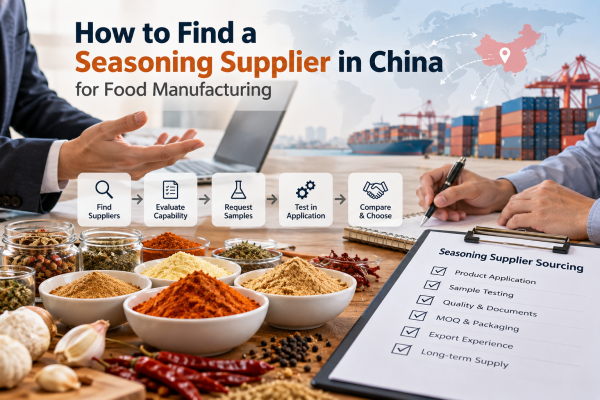
Buyers who are still selecting potential suppliers can also read our guide on how to find a seasoning supplier in China.
Typical Applications
Chili Sauce Seasoning System may be evaluated for commercial applications such as:
- Chili sauce
- Hot sauce
- Sweet chili sauce
- Chili garlic sauce
- Spicy dipping sauce
- Spicy sandwich sauce
- Spicy burger sauce
- Prepared food sauces
- Instant noodle sauce sachets
- Spicy marinades
- Chicken and seafood dipping sauces
- Other chili-based savory sauces
Final suitability should be confirmed through testing in the customer’s actual sauce formulation and processing conditions.
What Does a Chili Sauce Seasoning System Do?
A commercial chili sauce normally requires more than heat alone.
Depending on the selected product and application, the seasoning system may help support:
- Chili flavor character
- Savory and umami depth
- Garlic and onion notes
- Acidity balance
- Sweetness balance
- Spice integration
- Flavor body
- Overall richness
- Cooked sauce character
- Longer or fuller aftertaste
The exact sensory effect depends on the actual product, formulation and processing conditions.
What Problems Can It Help Address?
Food manufacturers may evaluate a chili sauce seasoning system when the current sauce has problems such as:
- The sauce is spicy but tastes too simple
- Chili aroma is too weak
- Savory depth is insufficient
- Acidity is too sharp
- Sweetness and heat are not balanced
- Garlic or onion notes do not integrate well
- The sauce lacks flavor body
- Chili character becomes weaker after heating
- The aftertaste is too short
- The finished sauce does not match the target benchmark
Clearly identifying the problem helps the supplier recommend a more relevant sample direction.
Chili Sauce Seasoning System vs. Finished Chili Sauce
This product should not be confused with finished retail chili sauce.
Finished chili sauce is a ready-to-use food product with its complete sauce formulation already established.
Chili Sauce Seasoning System is an ingredient solution for food manufacturers developing or adjusting their own chili sauce formulation.
The customer remains responsible for the complete finished product, including chili ingredients, water, oil, sugar, acid, salt, stabilizers and other formulation components where applicable.
Chili Sauce Seasoning vs. Chili Flavor
A chili flavor ingredient and a complete chili sauce seasoning system may perform different functions.
Chili flavor is generally more focused on delivering or strengthening a particular chili aroma or flavor character.
Chili sauce seasoning may play a broader role by supporting chili character together with savory taste, acidity, sweetness, spices and overall flavor body.
Depending on the formulation, both types of products may also be used together.
Chili Sauce Seasoning vs. General Savory Seasoning
A general savory seasoning may be used across many applications such as noodles, meat products, soups and sauces.
A chili sauce seasoning system is more application-specific and is designed around the sensory balance required in chili-based sauces.
Buyers comparing broader seasoning categories can also review our guide to savory seasoning manufacturers in China.
Possible Flavor Directions
There is no single universal chili sauce profile.
Different markets may prefer very different combinations of chili heat, sweetness, acidity, garlic, savory depth and spice character.
Depending on the project, possible directions may include:
- Classic savory chili sauce
- Hot and spicy profile
- Sweet chili profile
- Chili garlic profile
- Roasted chili character
- Cooked chili sauce profile
- Strong garlic and savory direction
- Sweet-sour-spicy balance
- Chicken-oriented spicy sauce
- Seafood-oriented spicy dipping sauce
- Regional Asian-style chili sauce directions
A benchmark product is often useful when discussing the desired direction.
For Classic Chili Sauce Applications
Classic chili sauce usually requires a balance between chili character, heat, saltiness, acidity, savory taste and overall body.
A sauce that is simply very spicy may still taste incomplete if it lacks savory depth or supporting aromatic notes.
The seasoning system should therefore be evaluated within the full sauce rather than judged only as a dry powder.
For Sweet Chili Sauce
Sweet chili sauce requires careful balance between sweetness, acidity, chili character and savory background.
If sweetness is too dominant, the sauce may lose chili impact.
If acidity is too strong, the sauce may become sharp.
If the savory background is too weak, the overall taste may feel thin even when sweetness and heat are sufficient.
Testing should therefore focus on the complete sensory balance rather than one individual taste parameter.
For Chili Garlic Sauce
Chili garlic sauce requires good integration between chili heat, garlic aroma, savory taste and the sauce base.
Garlic should be noticeable without completely masking the chili character.
Depending on the target market, buyers may also require onion, roasted, fermented or cooked sauce notes.
For Spicy Dipping Sauces
Dipping sauces often require relatively strong upfront flavor because they are consumed directly with fried foods, chicken, seafood, snacks or prepared foods.
The flavor system may need to balance:
- chili heat;
- savory impact;
- acidity;
- sweetness;
- garlic and spice notes;
- and aftertaste.
The intended food pairing should be communicated during sample development.
For Instant Noodle Sauce Sachets
Chili-based sauce sachets used in instant noodles may require a concentrated flavor profile that performs after mixing with noodles, soup, seasoning powder or oil components.
The buyer should explain whether the sauce is designed for dry noodles, soup noodles or another preparation style.
Evaluation should be carried out in the finished prepared noodles because dilution and other seasoning components can significantly change flavor perception.
Why Chili Type and Heat Level Matter
Different chili varieties can produce different aroma, heat and color characteristics.
A sauce may be designed around mild chili character, strong heat, roasted chili aroma or another specific profile.
The seasoning system should therefore be selected according to the target sensory direction rather than assuming that a higher heat level always produces a better chili sauce.
Why Acidity Matters
Acidity is an important part of many commercial chili sauces.
If acidity is too strong, it may suppress savory body and make the sauce taste sharp.
If acidity is too weak, the product may lack freshness or the desired sweet-sour-spicy balance.
The seasoning system should be tested together with the actual acid system used in the customer’s formulation.
Why Sweetness Matters
Sugar or other sweet components can significantly change chili perception.
Sweetness can soften heat and influence the overall sauce body, but excessive sweetness may reduce the perception of chili and savory notes.
The correct balance depends on the target product and market.
Why Oil Content Matters
Oil can influence both aroma release and heat perception in chili-based sauces.
A seasoning that performs well in a low-oil system may behave differently in an oil-rich chili sauce.
For this reason, samples should preferably be evaluated using the customer’s actual or target formulation.
Why Heating and Processing Matter
Heating can significantly affect chili aroma, garlic notes, savory character and overall flavor intensity.
Depending on the manufacturing process, buyers should consider:
- heating temperature;
- heating time;
- pasteurization or sterilization;
- hot filling;
- oil cooking;
- and storage after processing.
A seasoning should ideally be evaluated after the complete production-style process.
For New Chili Sauce Development
For a new chili sauce project, an available seasoning direction may be used as a starting point for sample evaluation.
Useful project information may include:
- Finished sauce type
- Target market
- Target heat level
- Desired chili profile
- Sweetness level
- Acidity direction
- Garlic or onion requirements
- Oil content
- Processing method
- Benchmark product, if available
- Expected purchasing volume
- Required technical or certification documents
This information helps the supplier understand what role the seasoning system needs to play.
For Existing Product Improvement
A chili sauce seasoning system may also be evaluated when an existing sauce needs sensory improvement.
Typical feedback may include:
- The sauce is hot enough but lacks chili aroma
- The chili character disappears after heating
- The sauce needs more savory depth
- The acid note is too sharp
- The sweetness is too dominant
- Garlic is overpowering the chili
- The sauce lacks body
- The aftertaste is too short
- The product does not match the benchmark closely enough
Specific feedback usually makes sample adjustment more efficient.
Why Application Testing Is Important
Chili Sauce Seasoning System should preferably be evaluated in the actual finished sauce rather than only by smelling or tasting the seasoning alone.
Flavor performance can be influenced by:
- Chili raw materials
- Water
- Oil
- Sugar
- Salt
- Acids
- Garlic
- Onion
- Spices
- Other savory ingredients
- Heating conditions
- Storage conditions
Testing under conditions close to actual commercial production provides a more realistic evaluation.
What Should Buyers Evaluate During Sample Testing?
Food manufacturers may evaluate:
- Chili aroma
- Heat perception
- Savory intensity
- Sweetness balance
- Acidity balance
- Garlic and onion integration
- Overall flavor body
- Performance after heating
- Aftertaste
- Off-notes
- Similarity to the target benchmark
For example, feedback such as “the heat level is acceptable but we need stronger cooked chili aroma and more savory body after heating” gives a clearer development direction than simply asking for a stronger sample.
Regional Chili Sauce Requirements
Chili sauce preferences vary significantly between markets.
A Vietnamese-style chili sauce, for example, may have a different sweetness, garlic, acidity and chili balance from sauces intended for other markets.
For buyers specifically developing that style, see our Vietnamese Chili Sauce Seasoning.
This broader Chili Sauce Seasoning System page is intended for manufacturers developing a wider range of chili and hot sauce profiles rather than one specific regional style.
How to Choose a Chili Sauce Seasoning Supplier
A suitable supplier should understand that chili sauce development involves more than chili heat alone.
Buyers may want to evaluate whether the supplier can discuss:
- the target sauce application;
- benchmark matching;
- heat and chili character;
- sweetness and acidity balance;
- savory depth;
- processing conditions;
- sample adjustment;
- technical documentation;
- and commercial supply requirements.
For broader sourcing considerations, see our guide on how to choose a savory flavor supplier in China.
What Information Should Buyers Confirm Before Ordering?
Before commercial purchasing, buyers should confirm the actual product and supply conditions with the supplier.
Depending on the project, this may include:
- Product specification
- Ingredient information
- Available technical documents
- Sample availability
- Packaging options
- Minimum order quantity
- Price
- Production lead time
- Export documentation
- Application support
These conditions depend on the actual product and supply source and should be confirmed before ordering.
Halal and Other Certification Requirements
If the target market requires Halal or another specific certification, buyers should communicate this requirement before sample approval and commercial ordering.
The exact product, certified entity, manufacturing site, certificate validity, product coverage, certification body and acceptance in the destination market should be confirmed according to the actual supply source.
A supplier holding a Halal certificate does not automatically mean that every chili sauce seasoning product is included within the certified scope.
Packaging, MOQ and Commercial Conditions
Packaging, minimum order quantity, pricing, production lead time and other commercial conditions vary according to the selected product and supply arrangement.
Buyers can provide their expected purchasing volume, destination market and project requirements so that the relevant commercial information can be confirmed accurately.
Looking for Chili Sauce Seasoning from China?
ZXS Flavors works with seasoning and savory flavor solutions for commercial food manufacturing.
If you are developing chili sauce, hot sauce, sweet chili sauce, chili garlic sauce, spicy dipping sauce, noodle sauce sachets or other spicy savory products, send us your finished product type, target market, desired flavor profile, processing method, benchmark and sample requirements.
We can review the project and discuss suitable seasoning directions according to the actual formulation and available supply source.
Contact ZXS Flavors to request product information, discuss samples or talk about your chili sauce seasoning project.