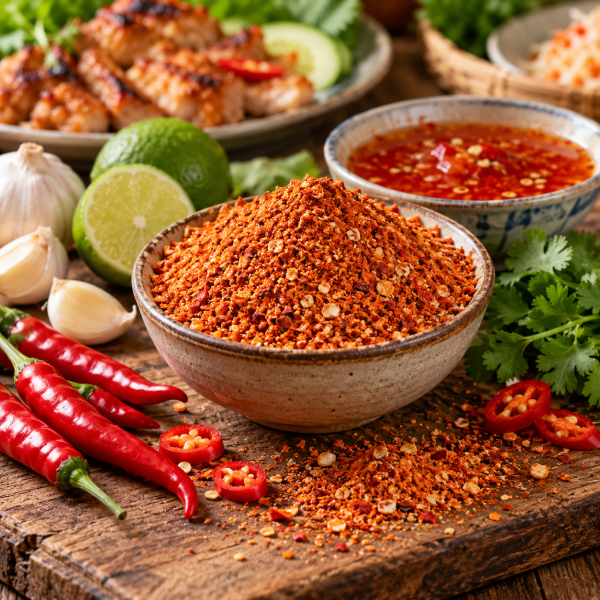
Vietnamese Chili Sauce Seasoning is an application-specific seasoning solution developed for food manufacturers producing Vietnamese-style chili sauces, dipping sauces and other savory sauce products.
The target profile is built around the interaction between chili aroma, heat intensity, sweetness, saltiness, tanginess, umami, savory depth and aftertaste rather than relying on chili heat alone.
What Is Vietnamese Chili Sauce Seasoning?
Vietnamese Chili Sauce Seasoning is a seasoning system designed to support the flavor development of chili sauce applications.
A complete Vietnamese-style chili sauce profile may include several sensory dimensions:
- clear chili aroma;
- controlled initial heat;
- balanced lingering heat;
- sweetness;
- saltiness;
- tanginess;
- umami and savory depth;
- spice aromatics;
- and a clean, balanced aftertaste.
The objective is not to maximize one individual taste. The key is creating a balanced flavor structure that performs consistently in the finished sauce application.
Designed for Chili Sauce Applications
Chili sauce seasoning needs to perform differently from seasoning used in snacks, noodles or meat products.
The finished flavor can be influenced by factors such as:
- the sauce base;
- sweetness level;
- acidity;
- chili intensity;
- salt concentration;
- sauce thickness;
- and the type of food the sauce is served with.
For this reason, Vietnamese Chili Sauce Seasoning should be evaluated in the finished sauce rather than only as a dry seasoning blend.
Key Flavor Structure
Chili Aroma
Chili aroma helps define the first sensory impression of the sauce. It should be noticeable without becoming excessively harsh or artificial.
Heat Intensity
Heat can appear immediately, gradually, or remain after swallowing. The desired heat profile should be adjusted according to the target consumer and product positioning.
Sweetness
Sweetness can help soften chili heat and create a rounder overall profile. Excessive sweetness, however, may make the sauce feel heavy.
Saltiness
Salt supports overall flavor intensity and helps connect the chili, sweet and savory layers.
Tanginess
A controlled sour note can make the sauce feel brighter and more appetizing. The target is balanced acidity rather than excessive sharpness.
Umami and Savory Depth
Umami and savory notes can provide body and help make the sauce feel more complete, especially when the sauce is used with fried foods, noodles, meat products or snacks.
Aftertaste
The final aftertaste should maintain enough chili and savory character without leaving excessive bitterness, harshness or heaviness.
Vietnamese Chili Sauce Seasoning vs. General Sauce Seasoning
Our Sauce Seasoning is a broader seasoning solution that can be developed for different savory sauce applications.
Vietnamese Chili Sauce Seasoning is more application-specific. It focuses particularly on the balance between:
- chili aroma;
- heat;
- sweetness;
- saltiness;
- tanginess;
- savory depth;
- and the final sensory experience of chili sauce.
This makes it suitable for manufacturers that already have a clear Vietnamese-style chili sauce direction and want to develop or optimize that specific application.
Suitable Applications
Vietnamese Chili Sauce Seasoning can be developed for applications such as:
- Vietnamese-style chili sauce;
- sweet chili sauce;
- savory dipping sauce;
- spicy dipping sauce;
- chili sauce for fried foods;
- chili sauce for noodles;
- chili sauce for meat products;
- and other savory sauce applications requiring a balanced spicy profile.
Benchmark-Based Development
If a manufacturer already has a successful market product as a benchmark, the development process can begin by separating the target into individual sensory dimensions.
Useful benchmarking points may include:
- chili aroma strength;
- initial heat;
- lingering heat;
- sweetness;
- saltiness;
- acidity;
- savory depth;
- sauce body;
- and aftertaste.
This approach makes prototype comparison and product adjustment more systematic.
For an example of this development method, see our guide on how to recreate a CHIN-SU-style Vietnamese chili sauce flavor direction.
Custom Flavor Development
The ideal chili sauce profile can vary depending on the target market and product concept.
Manufacturers may require a profile that is:
- more chili-forward;
- hotter;
- sweeter;
- less sweet;
- more tangy;
- deeper in savory character;
- lighter in aftertaste;
- or designed for a specific food application.
For this reason, the seasoning can be developed around a specific benchmark, sensory target and sauce application rather than using only one fixed generic profile.
Application Testing
A chili sauce that tastes balanced on its own may perform differently when used with real food.
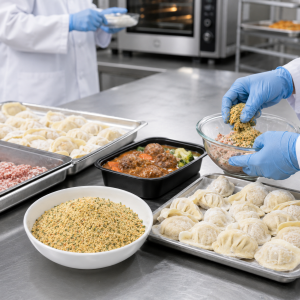
Application testing can evaluate the seasoning in combinations with:
- fried foods;
- instant noodles;
- meat products;
- snacks;
- sandwiches;
- dumplings;
- and other prepared foods.
Fat, starch, salt and serving temperature can all change how sweetness, acidity, chili heat and aroma are perceived.
What Information Helps With Development?
When requesting a customized Vietnamese Chili Sauce Seasoning, useful information may include:
- target market;
- benchmark product;
- preferred heat level;
- desired sweetness;
- desired acidity;
- target savory intensity;
- finished sauce application;
- target consumer group;
- and feedback from current prototypes.
Providing these details helps define the sensory target more clearly and makes prototype development more efficient.
Develop Your Vietnamese-Style Chili Sauce
If you are developing a Vietnamese-style chili sauce, dipping sauce or other savory sauce application, we can discuss the project based on your target flavor profile, market benchmark and finished product application.
Contact us to discuss Vietnamese Chili Sauce Seasoning and related sauce flavor development solutions.