
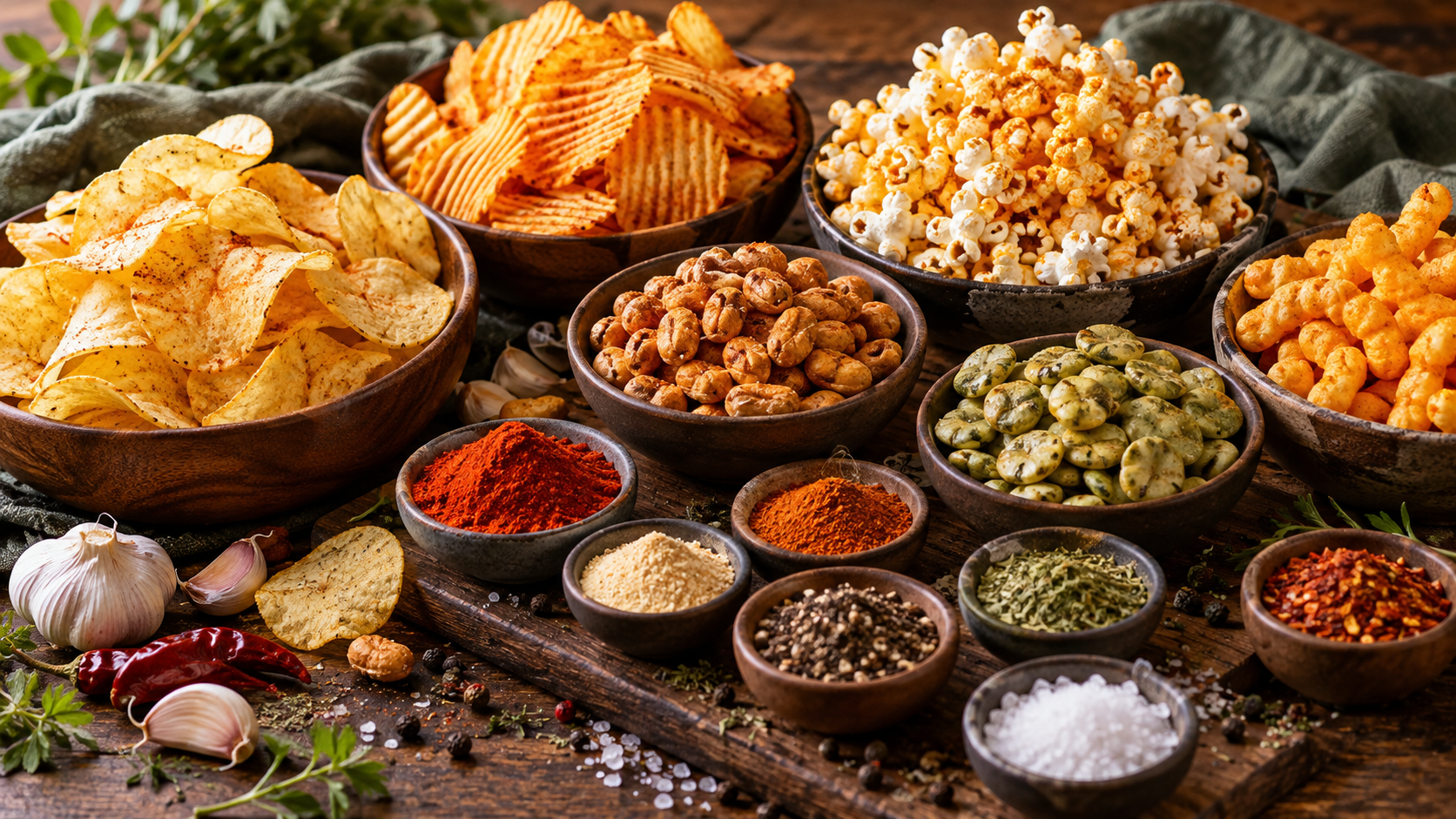
Quick answer: A snack seasoning supplier can develop flavor systems for potato chips, extruded snacks, nuts, popcorn, crackers and other savory products. The most suitable formula depends on the snack base, surface oil, application method, target market and desired flavor profile.
What products can snack seasoning be used for?
Applications include potato chips, tortilla chips, extruded corn or rice snacks, coated nuts, popcorn, crackers, puffed snacks and pellet snacks. Each surface absorbs and retains seasoning differently.
Which snack flavors can be customized?
Common directions include BBQ, cheese, chicken, beef, seafood, spicy, tomato, onion, garlic, sour cream and regional profiles. Saltiness, heat, umami, sweetness and aroma can all be adjusted.
Are seasonings for potato chips and extruded snacks the same?
Not necessarily. Potato chips have a thin oily surface, while extruded snacks may have more pores and different oil distribution. Particle size, dosage and carrier system should match the actual product.
Does seasoning adhesion matter?
Yes. Poor adhesion creates flavor variation and powder loss. Manufacturers should evaluate surface oil, application temperature, tumbling conditions and seasoning particle size.
Can saltiness, spiciness and umami be customized?
Yes. Adjustments should be made in the finished snack because the base material and oil can change perceived intensity.
What roles do seasoning blends, flavor bases and reaction flavors play?
Seasoning blends build the overall taste; flavor bases add body and savory depth; reaction flavors contribute cooked, roasted or meaty character.
What should manufacturers consider for BBQ snack seasoning?
BBQ profiles may combine smoke, roasted meat, sweetness, acidity, chili and spices. Balance is more important than maximum intensity, especially when the snack already has a strong fried note.
What information should be provided when requesting samples?
- Snack type and base material
- Target market and flavor direction
- Surface oil level and application method
- Expected usage rate and benchmark sample
- Ingredient, labeling and cost requirements
Can a supplier develop from a benchmark product?
Yes. A physical benchmark helps define aroma, saltiness, heat, umami and aftertaste. The goal should be clarified as matching, improving or adapting the reference.
Can development start without a benchmark?
Yes. A clear brief with product type, target consumer, flavor description and processing information is enough to prepare an initial direction.
How should snack seasoning samples be evaluated?
Apply each sample at a controlled dosage to the real snack base. Compare aroma, initial impact, balance, adhesion and aftertaste, then record specific feedback.
What is the MOQ for customized snack seasoning?
MOQ depends on formula, ingredients and packaging. Buyers should discuss expected volume early so the supplier can propose a practical development and production route.
Can samples be requested before a bulk order?
Yes. Sampling and application testing should be completed before commercial production. Scale-up should follow the confirmed reference sample.
How do you choose a snack seasoning supplier in China?
Evaluate application experience, customization capability, batch consistency, technical documents, communication and export support—not price alone.
Snack seasoning from China for food manufacturers
Zhongxinsheng Flavor Co., Ltd. develops customized snack seasoning for food manufacturers, importers and distributors. Explore our product range or provide your benchmark and application information to begin sample development.
Are you looking for a snack seasoning supplier in China?
Send the snack type, target flavor, market, usage method and expected volume. This information helps us recommend a suitable starting formula and sample plan.