
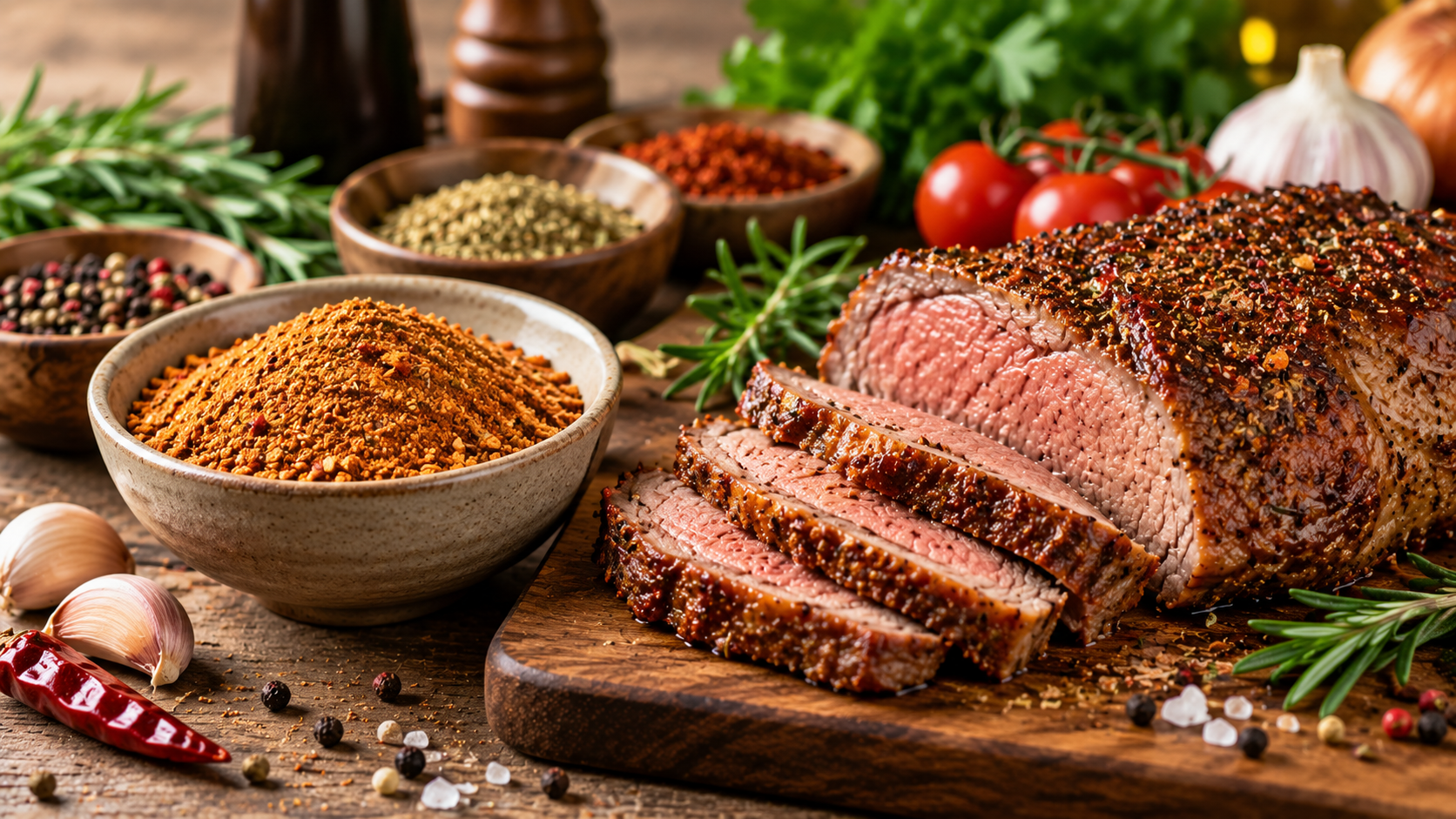
For manufacturers of sausages, meatballs, processed meat, frozen foods, ready meals, and other savory products, finding the right meat seasoning manufacturer in China involves more than comparing price per kilogram. A suitable supplier should be able to understand the finished food application, support sample development, adjust the flavor according to feedback, and maintain consistency when the project moves into commercial production.
Different meat products have different raw materials, fat levels, salt levels, processing temperatures, and target flavor profiles. A seasoning developed for sausage may therefore perform very differently in meatballs, grilled meat, frozen foods, or ready-to-eat products.
For this reason, many food manufacturers prefer customized seasoning solutions rather than relying only on standard off-the-shelf formulas.
Why Do Food Manufacturers Need Custom Meat Seasoning?
A standard meat seasoning is not always suitable for every product.
Sausages, for example, need a balance between meatiness, umami, salt, spices, fat, and overall flavor intensity. Meatballs may require stronger body and a fuller meat profile. BBQ and grilled meat products may need more roasted, grilled, smoky, or cooked notes. Frozen and retorted products may require greater attention to flavor stability after heating and storage.
Depending on the application, a custom meat seasoning can be adjusted for:
- Meat flavor intensity
- Umami level
- Salt balance
- Meatiness and body
- Cooked, roasted, grilled, or smoky notes
- Spice and herb profile
- Fatty and savory notes
- Aftertaste
- Flavor performance after heating
What Products Can Meat Seasoning Be Used For?
Sausages and Emulsified Meat Products
Seasoning for sausages needs to perform well in a system containing meat, fat, water, salt, and other functional ingredients.
The flavor should not only be attractive as a dry powder. It should remain balanced after mixing, filling, cooking, smoking, or other processing steps.
Meatballs and Processed Meat Products
For meatballs and other processed meat products, manufacturers often focus on meatiness, umami, spice balance, juiciness perception, and aftertaste.
The seasoning system may need to be adjusted according to the meat source, fat level, cooking method, and target market.
BBQ and Grilled Meat Products
BBQ, grilled meat, and roasted meat applications often require stronger roasted, grilled, smoky, or cooked flavor characteristics.
In some projects, seasoning blends can be combined with Reaction Flavors to increase the depth and cooked-meat character of the finished product.
Frozen Foods and Ready Meals
Frozen and prepared foods may go through several stages including cooking, cooling, freezing, storage, and reheating.
Because of this, seasoning should be evaluated under conditions that are as close as possible to the actual manufacturing process.
What Types of Flavor Solutions Can Be Used in Meat Products?
Seasoning Blends
Seasoning Blends help build the main taste structure of the product, including saltiness, umami, spices, meat notes, and overall flavor balance.
Flavor Bases
Flavor Bases can help increase meatiness, body, savory depth, and mouthfeel.
They are especially useful when the finished product has enough aroma but still feels thin or lacks depth.
Reaction Flavors
Reaction flavors can be considered when a product requires stronger cooked, roasted, grilled, or meaty characteristics.
Seasoning blends, flavor bases, and reaction flavors do not necessarily replace one another. In many industrial food applications, they can be combined to create a more complete flavor system.
Why Is Heat Stability Important in Meat Seasoning?
Heating can significantly change the way a seasoning performs in a finished meat product.
A sample may smell strong before processing but become weaker after steaming, boiling, baking, frying, smoking, or retorting.
This does not always mean that more seasoning should be added. The formulation may instead need a different balance between seasoning, flavor base, and heat-stable savory components.
For a deeper explanation, you can read our article Processed Meat Seasoning: Key Flavor Considerations for Food Manufacturers.
What Information Should You Provide When Requesting a Sample?
Clear project information helps a meat seasoning supplier develop a more relevant sample and reduces unnecessary adjustment rounds.
Useful information includes:
- Product type: sausage, meatball, grilled meat, frozen product, ready meal, or another application
- Main raw material: chicken, beef, pork, or another protein system
- Target flavor: meaty, roasted, grilled, spicy, smoky, or another profile
- Reference sample: an existing target product can help define the desired direction
- Processing method: steaming, boiling, frying, baking, smoking, retorting, or other processes
- Target market: Southeast Asia, North America, the Middle East, South America, or other regions
- Expected purchasing volume: useful for discussing sample development and future commercial production
How Does Custom Meat Seasoning Development Work?
A typical custom seasoning project may follow this process:
Requirement discussion → Target product confirmation → Sample development → Application testing → Adjustment based on feedback → Final sample approval → Commercial production
Application testing is one of the most important stages.
A seasoning should not be approved only by smelling or tasting the powder directly. The final decision should be based on how the seasoning performs in the actual food formula after real processing conditions.
How to Choose a Meat Seasoning Manufacturer
Custom Formulation Capability
A good supplier should be able to discuss and adjust the flavor according to the actual application instead of only offering a fixed product list.
Experience with Meat Applications
Sausages, meatballs, BBQ products, frozen foods, and retorted products all have different processing conditions.
A supplier with application experience can better understand how heat, fat, salt, water, and other ingredients affect the final flavor.
Sample Development and Adjustment Support
The first sample in a custom project may not perfectly match the target.
The ability to adjust meatiness, aroma, umami, saltiness, spices, and aftertaste according to customer feedback is therefore important.
Consistency in Commercial Production
For B2B food manufacturers, a good laboratory sample is only the beginning.
The seasoning also needs to remain consistent when the project moves into larger-volume production and repeat orders.
Raw material control, formula consistency, production management, and batch-to-batch stability are therefore important when evaluating a long-term supplier.
Why Source Meat Seasoning from China?
China has a well-developed supply chain for food ingredients, compound seasonings, savory flavors, and related food manufacturing materials.
For international food manufacturers, importers, and distributors, sourcing from China can provide access to a wide range of seasoning systems and flexible custom development options.
For companies developing multiple SKUs, working with a supplier that can provide seasoning blends, flavor bases, reaction flavors, and application-specific solutions can also make product development more efficient.
Custom Meat Seasoning Solutions for Food Manufacturers
Our product range includes seasoning blends, flavor bases, reaction flavors, and application seasonings for different savory food applications.
For meat seasoning projects, sample development can be discussed based on the target food, meat type, processing conditions, target market, reference sample, and desired flavor profile.
You can explore more options through our Products page.
Looking for a Meat Seasoning Manufacturer in China?
If you are developing sausages, meatballs, BBQ products, processed meat, frozen foods, ready meals, or other savory products and are looking for a meat seasoning manufacturer in China, you can share your product application, processing method, target market, desired flavor, or reference sample with us.
We can discuss a suitable seasoning solution and sample development plan based on your actual project requirements.
Contact us to discuss your meat seasoning project.