
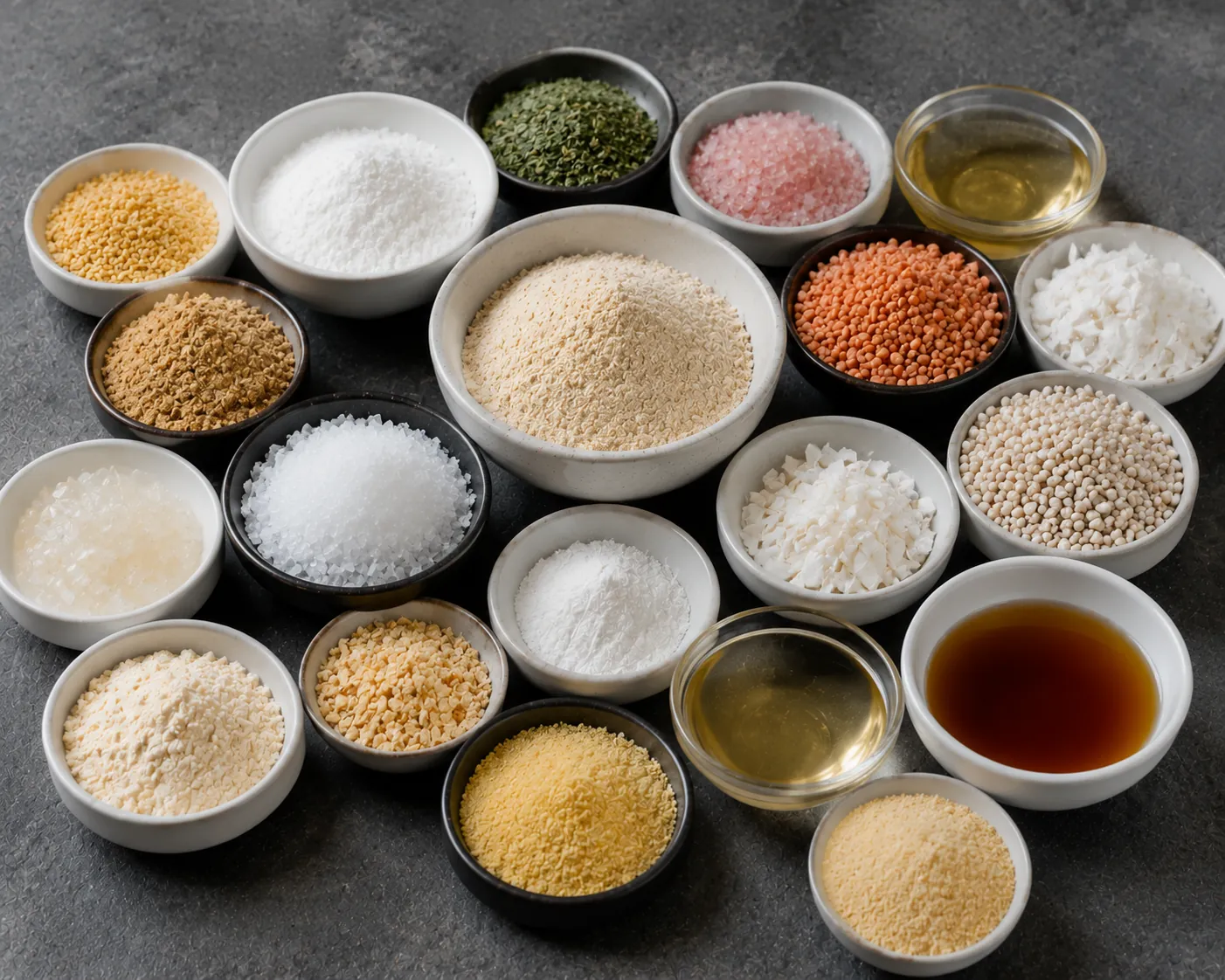
Food additives play an important role in modern food manufacturing by improving flavor, texture, stability and overall product performance.
For food manufacturers, understanding different food additives examples helps with selecting suitable ingredients and developing products that meet quality, processing and consumer requirements.
Although the term “food additives” covers a wide range of ingredients, different additives serve different purposes. Some improve taste, some support texture, while others help maintain product consistency during production and storage.
What Are Food Additives?
Food additives are substances used in food production to achieve specific technical functions.
Depending on their purpose, food additives may help improve:
- Flavor and taste
- Texture and mouthfeel
- Product stability
- Processing performance
- Overall food quality
For industrial food production, additives are selected according to the final application, manufacturing process and target market requirements.
Common Food Additives Examples
Different food categories require different additive solutions. Common examples include flavor-related ingredients, texture modifiers, preservation systems and processing aids.
1. Flavor Enhancers
Flavor enhancers are commonly used to improve savory taste and increase overall flavor perception.
They are widely applied in products such as:
- Seasoning powders
- Instant noodles
- Snacks
- Soups and broths
- Sauces
In many food applications, flavor enhancers are combined with other seasoning components to create a balanced taste profile.
Manufacturers can also develop complete flavor systems through customized seasoning blends instead of using individual ingredients separately.
2. Flavor Ingredients and Savory Components
Flavor ingredients help create specific taste characteristics, including meat, roasted, cooked, savory and specialty flavor profiles.
These ingredients are often used in:
- Meat products
- Prepared foods
- Soup bases
- Sauces
- Snack seasoning systems
Different applications may require different flavor intensity, aroma balance and aftertaste performance.
3. Texture and Mouthfeel Ingredients
Some food additives are used to improve texture, consistency and mouthfeel.
They can help food products achieve:
- Better viscosity
- Improved stability
- Smoother texture
- More consistent product performance
The correct choice depends on the food category and processing conditions.
4. Stabilizing and Processing Ingredients
During food manufacturing, some products require ingredients that support stability during processing, transportation and storage.
Manufacturers consider factors such as:
- Processing temperature
- Storage conditions
- Product shelf life
- Final application method
5. Natural Flavor and Extract-Based Ingredients
Many food manufacturers are increasingly interested in natural flavor sources and extract-based solutions.
These ingredients can provide deeper flavor characteristics and support the development of cleaner-label food products.
Examples include:
- Meat flavor extracts
- Plant-based flavor components
- Savory extracts
- Specialty flavor solutions
How Food Manufacturers Select Food Additives
Selecting suitable food additives requires considering more than just flavor or function.
Product Application
A seasoning powder, sauce, soup base and ready-to-eat product may require completely different solutions.
Processing Requirements
Manufacturers need to consider heating, mixing, storage and transportation conditions.
Target Consumer Preferences
Different regions may prefer different levels of saltiness, aroma, sweetness, spice and savory intensity.
Regulatory Requirements
Food manufacturers must ensure that selected ingredients meet the regulations and requirements of their target markets.
Food Additives and Customized Seasoning Solutions
Many successful food products do not rely on a single ingredient. Instead, manufacturers often combine multiple components to create a complete flavor system.
Customized solutions can help brands achieve:
- Consistent flavor performance
- Better product differentiation
- Regional market adaptation
- Improved consumer experience
For food manufacturers developing application-specific products, our application seasoning solutions provide customized flavor development options for different food categories.
Conclusion
Food additives examples include flavor enhancers, flavor ingredients, texture-related ingredients and processing solutions used in modern food manufacturing.
The right selection depends on the product type, manufacturing process and target market.
Zhongxinsheng Flavor Co., Ltd. develops customized seasoning and flavor solutions for food manufacturers, helping customers create consistent and application-focused food products.
Contact our team to discuss your flavor development requirements.