
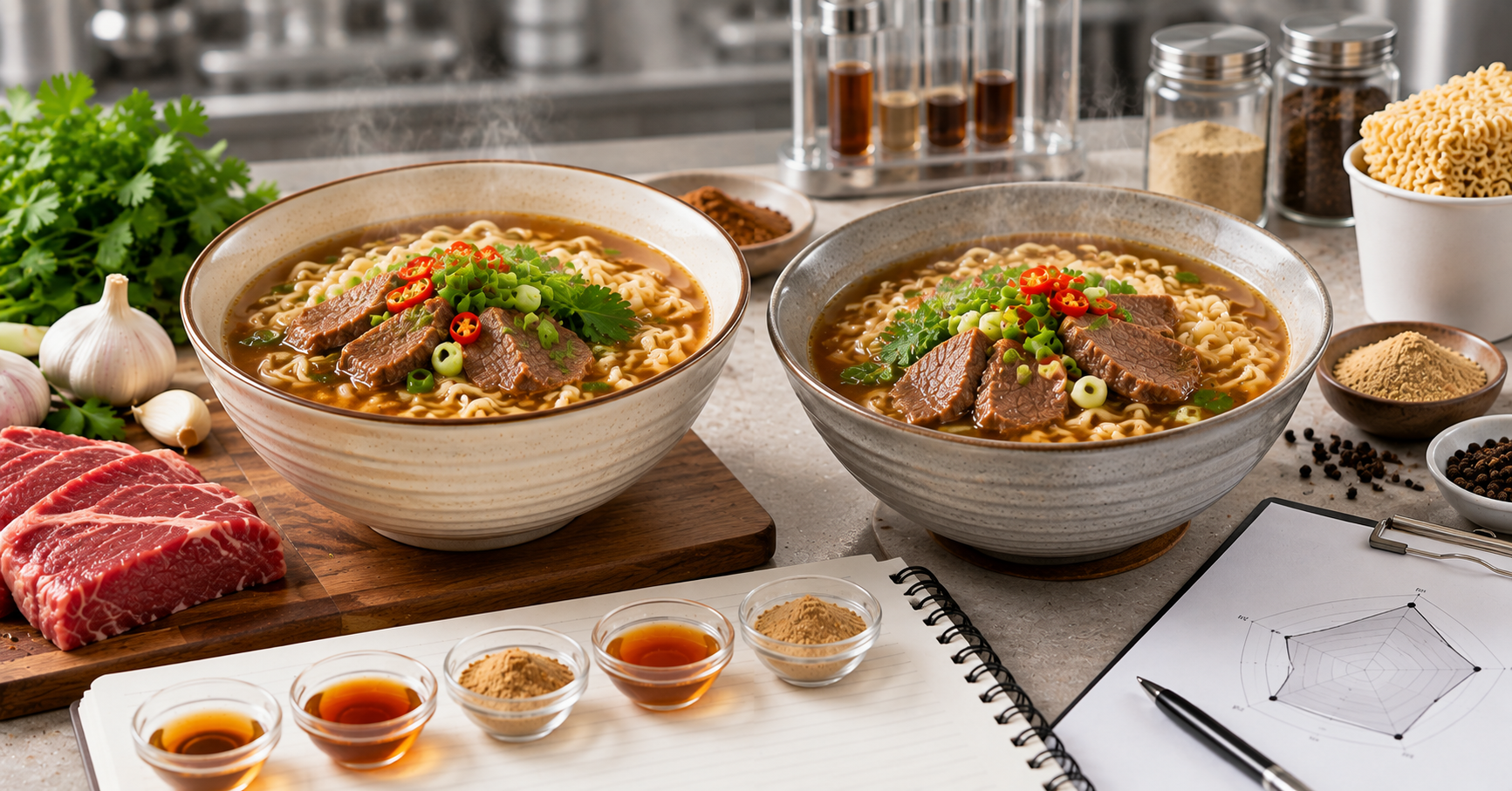
A flavor match may appear 90% complete very quickly, yet the final 10% often requires the most testing. The reason is that consumers notice small differences in aroma timing, mouthfeel, cooked character and aftertaste even when the main flavor direction is already correct.
The final 10% is often hidden in small but noticeable details
Saltiness, umami and the main aroma may already be close, while subtle differences remain in sweetness, acidity, spice balance, fat perception or finish. These details create the overall impression of similarity.
A similar top note does not mean the full flavor experience is matched
Initial aroma is only one stage. Flavor changes during chewing, dilution and swallowing. A successful match must reproduce the complete sequence rather than only the first smell.
Aftertaste is one of the hardest parts to reproduce
The length, cleanliness and direction of the finish depend on many interacting ingredients. A product may taste close at first but leave a different savory, bitter, sweet or spicy note.
Flavor bases affect the difficult-to-describe feeling of similarity
Flavor bases provide body, continuity and savory depth. If this layer is weak, the sample may have the correct aroma but still feel thin or incomplete.
Reaction flavors influence cooked, roasted and meaty character
Reaction flavors contribute thermal notes that are difficult to reproduce with spices alone. Small changes can alter the perceived realism of grilled, roasted, broth or meat profiles.
Fat and the food matrix can create major differences
Oil, protein, starch, water and pH affect aroma release. The same seasoning performs differently in soup, noodles, snacks, sauces and processed meat.
Production can remove similarity achieved in the laboratory
Heat, mixing, drying, frying, freezing and reheating may reduce or transform volatile notes. A match must survive the actual manufacturing process.
The reference product is not always completely consistent
Different batches, storage conditions and preparation methods can change the benchmark. Several samples should be evaluated before defining the target precisely.
Not every difference needs to be eliminated
Some differences are not commercially meaningful. The team should prioritize the sensory characteristics that consumers recognize and that remain stable in production.
Why does each test round need more specific feedback near the target?
Broad comments are useful early, but later rounds require precise descriptions such as “shorter roasted aftertaste” or “slightly weaker broth body.” Specific feedback prevents unnecessary changes.
Flavor matching is an iterative process, not a single formula
The process includes benchmark analysis, prototype preparation, application testing, feedback, adjustment and scale-up verification. Each round should change a controlled set of variables.
Benchmark-based flavor development for food manufacturers
Zhongxinsheng Flavor Co., Ltd. develops customized seasoning blends, flavor bases and reaction flavors for manufacturers working from benchmark products or target profiles. Explore our product range or send your application and reference sample information.