
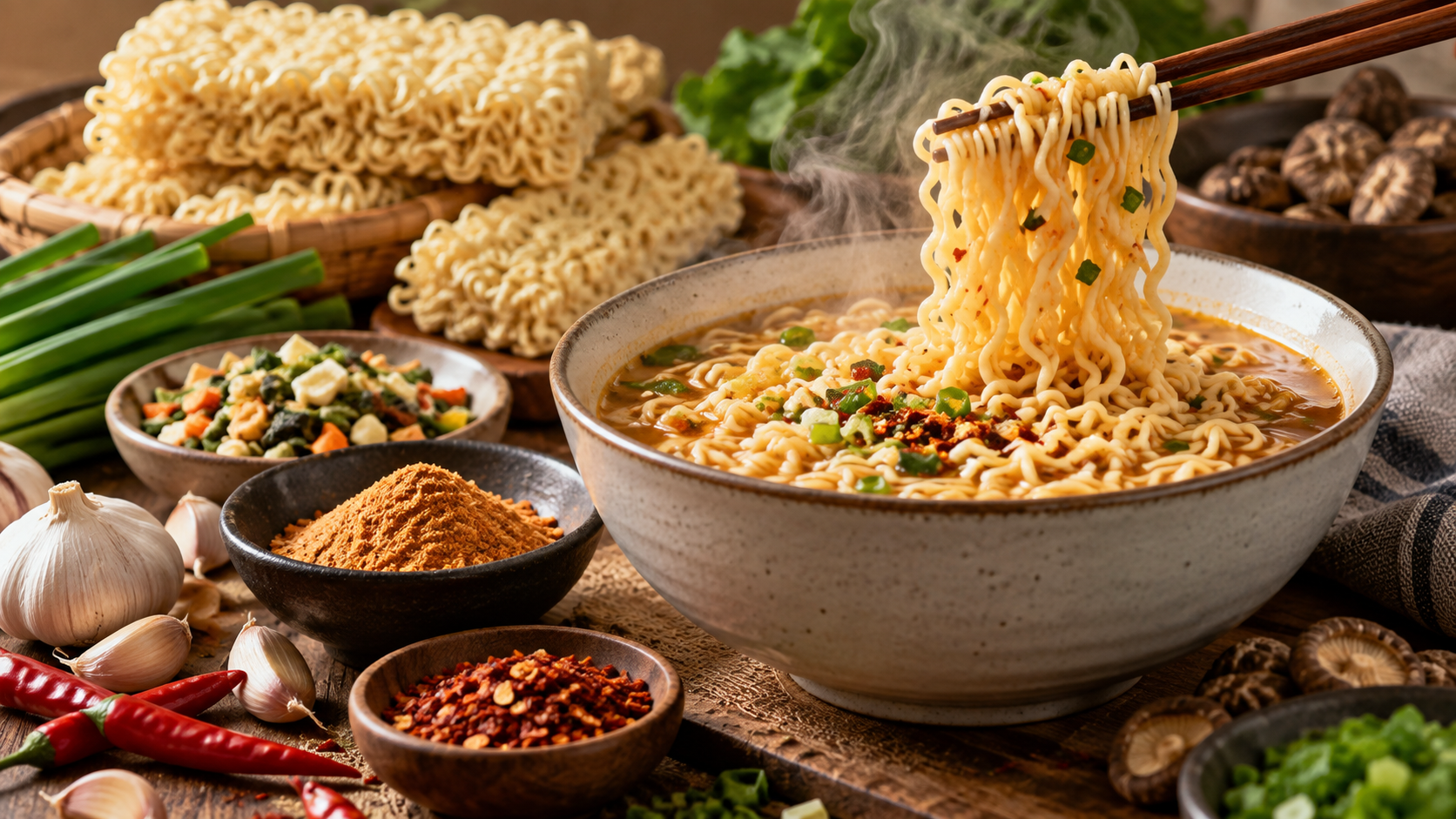
Quick Answer: To buy an instant noodle flavor base from China, food manufacturers should first define the target noodle application, broth style, flavor direction, processing conditions and market requirements. Then compare suppliers based on application understanding, customization capability, sample development, batch consistency and communication—not only price. The best purchasing process usually starts with application information and sample evaluation before moving to commercial orders.
For instant noodle manufacturers, choosing a flavor base is not simply a matter of finding a chicken, beef, pork or seafood flavor and asking for a quotation.
The flavor base needs to work inside a complete noodle system that may include seasoning powder, oil sachets, sauce components, spices, salt, sugar, umami ingredients and other flavor materials.
This means buyers looking to buy instant noodle flavor base from China should evaluate both the product itself and the supplier’s ability to understand the final food application.
This guide explains what buyers should consider before sourcing an instant noodle flavor base from a Chinese supplier.
What Is an Instant Noodle Flavor Base?
An instant noodle flavor base is a savory flavor foundation used to help build body, meatiness, broth richness, umami and overall flavor depth in noodle soup or seasoning systems.
Depending on the target product, a flavor base may help support:
- broth body;
- meaty character;
- savory depth;
- umami perception;
- mouthfeel;
- flavor continuity;
- and the overall foundation of the finished soup profile.
A flavor base is usually not the same as a complete instant noodle seasoning blend.
A complete seasoning blend may include saltiness, sweetness, spices, chili, acidity, aroma and other taste components, while a flavor base is often used to strengthen the underlying savory structure of the product.
You can read more about this difference in our guide to Reaction Flavor vs. Flavor Base.
Why Buy Instant Noodle Flavor Base from China?
China has a large food ingredient and seasoning manufacturing industry serving noodles, snacks, sauces, meat products, frozen foods and other processed food applications.
For overseas food manufacturers and importers, sourcing from China may provide access to different savory flavor directions and customized development options.
However, supplier selection should not be based only on whether a company can provide a product called “chicken flavor” or “beef flavor.”
The more important question is:
Can the supplier adjust the flavor base to work in your actual instant noodle product?
Step 1: Define the Type of Instant Noodle Product
Before contacting a supplier, buyers should clearly define the final noodle application.
For example:
- cup noodles;
- bagged instant noodles;
- dry mixed noodles;
- soup noodles;
- spicy noodles;
- premium noodle products;
- or regional-style noodle products.
The flavor system may perform differently depending on whether the product is diluted in hot water, mixed directly with cooked noodles or combined with a separate oil or sauce sachet.
This application information helps the supplier understand how the flavor base will actually be used.
Step 2: Define the Target Flavor Direction
“Chicken flavor” or “beef flavor” is usually too broad for effective sample development.
Buyers should describe the desired sensory direction in more detail.
Possible examples include:
- light chicken broth;
- rich chicken soup;
- deep beef broth;
- roasted beef character;
- rich pork-style broth;
- seafood soup;
- spicy savory broth;
- clear soup profile;
- or a flavor direction based on an existing benchmark product.
If the buyer already has a reference product, sample or sensory description, sharing this information can make supplier selection and sample adjustment more efficient.
Step 3: Decide What Problem the Flavor Base Needs to Solve
A good sourcing discussion should not only describe the desired flavor. It should also explain what is currently missing from the existing noodle formulation.
Typical problems may include:
- the broth tastes too thin;
- the meaty character is weak;
- the umami feels sharp but lacks body;
- the aroma is acceptable but the soup lacks depth;
- the flavor becomes weak after dilution;
- the product lacks a long savory finish;
- or the current seasoning does not create the intended regional flavor profile.
This helps the supplier determine whether the project mainly needs a flavor base, a seasoning blend, a reaction flavor or a combination of several components.
Step 4: Choose the Right Flavor Base Direction
Different instant noodle concepts may require different flavor foundations.
Chicken Flavor Base
Chicken-style flavor bases may be evaluated for light broths, rich chicken soups, spicy chicken noodles or other savory noodle products requiring chicken character and broth body.
Beef Flavor Base
Beef-style flavor bases can be considered for beef noodles, spicy beef broth and other products that need stronger meatiness, savory depth and broth richness.
Pork Flavor Base
Pork-style flavor bases may be suitable for noodle applications that require fuller broth perception, meatiness and a richer savory foundation.
Seafood Flavor Base
Seafood-style flavor bases may be used in shrimp, seafood, shellfish-inspired or mixed marine flavor directions depending on the target product.
Umami Flavor Base
An umami-focused flavor base may be useful when the objective is not to create one specific meat direction, but to strengthen overall savory body and depth.
Buyers can explore our Flavor Bases category for different savory flavor directions.
Step 5: Understand the Difference Between Flavor Base and Complete Seasoning
This is one of the most important points when buying instant noodle ingredients.
A flavor base normally forms only one part of the finished flavor system.
A complete instant noodle seasoning may also need:
- salt;
- sweetness;
- spices;
- chili;
- acidity;
- oil-soluble aroma components;
- reaction flavors;
- vegetable or herb notes;
- and other taste-adjusting ingredients.
Therefore, buyers should tell suppliers whether they want:
- a flavor base only;
- a complete seasoning powder;
- a soup seasoning system;
- a seasoning plus oil sachet concept;
- or support developing a broader noodle flavor system.
For more information about complete seasoning sourcing, see our guide on Instant Noodle Seasoning Suppliers in China.
Step 6: Provide Processing Information
The same flavor base can perform differently depending on processing and preparation conditions.
Useful information may include:
- how much water the finished noodle is prepared with;
- whether the flavor is used in powder, oil or sauce systems;
- whether the seasoning is exposed to heating during production;
- whether the product contains significant oil or fat;
- whether the product is fried or non-fried;
- and how the consumer prepares the final noodles.
Application testing should ideally reflect the actual preparation conditions of the final product.
Step 7: Ask for Samples Before Commercial Purchasing
For a new supplier or new flavor direction, sample evaluation is an important step before commercial purchasing.
The buyer can compare samples based on:
- broth body;
- meaty character;
- umami;
- aroma;
- mouthfeel;
- aftertaste;
- compatibility with existing seasoning;
- and performance after dilution and preparation.
Samples should ideally be tested in the actual noodle formulation rather than only smelled or tasted as an isolated ingredient.
How Should Buyers Give Sample Feedback?
Specific feedback is much more useful than simply saying that a sample is “good” or “not good.”
Examples of more useful feedback include:
- the broth body is good but the chicken character is too light;
- the meatiness is suitable but the roasted note is too strong;
- the flavor is good before dilution but becomes weak in the finished soup;
- the umami is strong but the aftertaste is too short;
- or the aroma direction is correct but the overall profile needs more richness.
This type of feedback makes customized sample adjustment more efficient.
Step 8: Compare Suppliers Beyond Price
Price is important, but it should not be the only factor when choosing an instant noodle flavor base supplier.
Buyers should also evaluate:
- Application understanding: Does the supplier understand instant noodle systems rather than only selling individual ingredients?
- Customization capability: Can the flavor direction be adjusted according to the final product?
- Sample development: Can the supplier respond to sensory feedback and provide revised samples?
- Batch consistency: Can the approved flavor direction be maintained in future production?
- Communication: Can technical and commercial requirements be discussed clearly?
- Documentation: Can the supplier discuss the documents required for the buyer’s target market?
- Commercial supply: Can the supplier support the transition from sample approval to repeat purchasing?
What Documents Should Buyers Discuss?
Document requirements vary according to the product, destination market and customer.
Before commercial purchasing, buyers may need to discuss items such as:
- product specification;
- ingredient information;
- allergen information where applicable;
- certificate of analysis or quality documentation where required;
- shelf-life information;
- packaging information;
- and export or market-specific documents required by the project.
The exact requirements should be confirmed before the commercial order rather than assumed during sample development.
What Information Should You Send to a Chinese Supplier?
A useful sourcing inquiry can include:
- Product: instant noodles or another noodle application.
- Flavor: chicken, beef, pork, seafood, spicy, umami or another direction.
- Target profile: light, rich, roasted, cooked, spicy or another sensory direction.
- Current problem: weak body, insufficient meatiness, short aftertaste or another issue.
- Reference: an existing sample or benchmark product if available.
- Processing method: relevant heating, dilution or preparation conditions.
- Target market: country or region where the finished product will be sold.
- Expected purchasing volume: to support commercial supply discussions.
- Required documents or restrictions: if the project has specific requirements.
The clearer the initial information, the easier it is for the supplier to recommend or develop a suitable sample.
Common Mistakes When Buying Instant Noodle Flavor Base from China
Several sourcing mistakes can slow down a project.
Choosing Only by Price
A lower ingredient price does not automatically mean a lower cost in the finished noodle product. Application performance, required usage level, flavor compatibility and consistency also matter.
Requesting a Sample Without Application Information
Simply asking for “your best beef flavor” gives the supplier very little information about the actual product target.
Evaluating the Flavor Base by Itself
A flavor base should normally be tested inside the final or representative food system.
Confusing Flavor Base with Complete Seasoning
If the buyer expects one flavor base to provide the entire salt, spice, aroma and taste system, the sample may appear incomplete even when the flavor base itself is suitable.
Moving to a Large Order Too Quickly
The approved sample should be evaluated under realistic application conditions before moving into regular commercial purchasing.
How to Select an Instant Noodle Flavor Base Supplier in China
A suitable supplier should be able to discuss the project from the perspective of the final food application.
Instead of only asking:
“Which flavor do you want?”
a more application-focused supplier may also ask:
- What type of noodles are you producing?
- What broth style are you targeting?
- What problem are you trying to solve?
- How is the seasoning used?
- What reference product do you have?
- What market will the finished product enter?
These questions help connect the ingredient to the actual commercial food product.
Buying Instant Noodle Flavor Base from China: Recommended Process
A practical sourcing process can follow these steps:
- Define the noodle application.
- Define the target flavor profile.
- Identify the current flavor problem.
- Select the appropriate flavor base direction.
- Provide processing and market information.
- Request suitable samples.
- Test the samples in the actual noodle system.
- Provide specific sensory feedback.
- Confirm the final sample and commercial requirements.
- Move to commercial production and repeat supply.
This process is usually more reliable than comparing suppliers based only on catalog names or quotation prices.
Instant Noodle Flavor Base Supplier in China
Zhongxinsheng Flavor Co., Ltd. develops flavor bases, seasoning blends, reaction flavors and application seasoning solutions for food manufacturers, importers and distributors.
For instant noodle projects, flavor development can be discussed according to the target broth profile, food application, processing conditions and customer sensory requirements.
You can browse our seasoning and flavor products or explore our Flavor Bases range.