
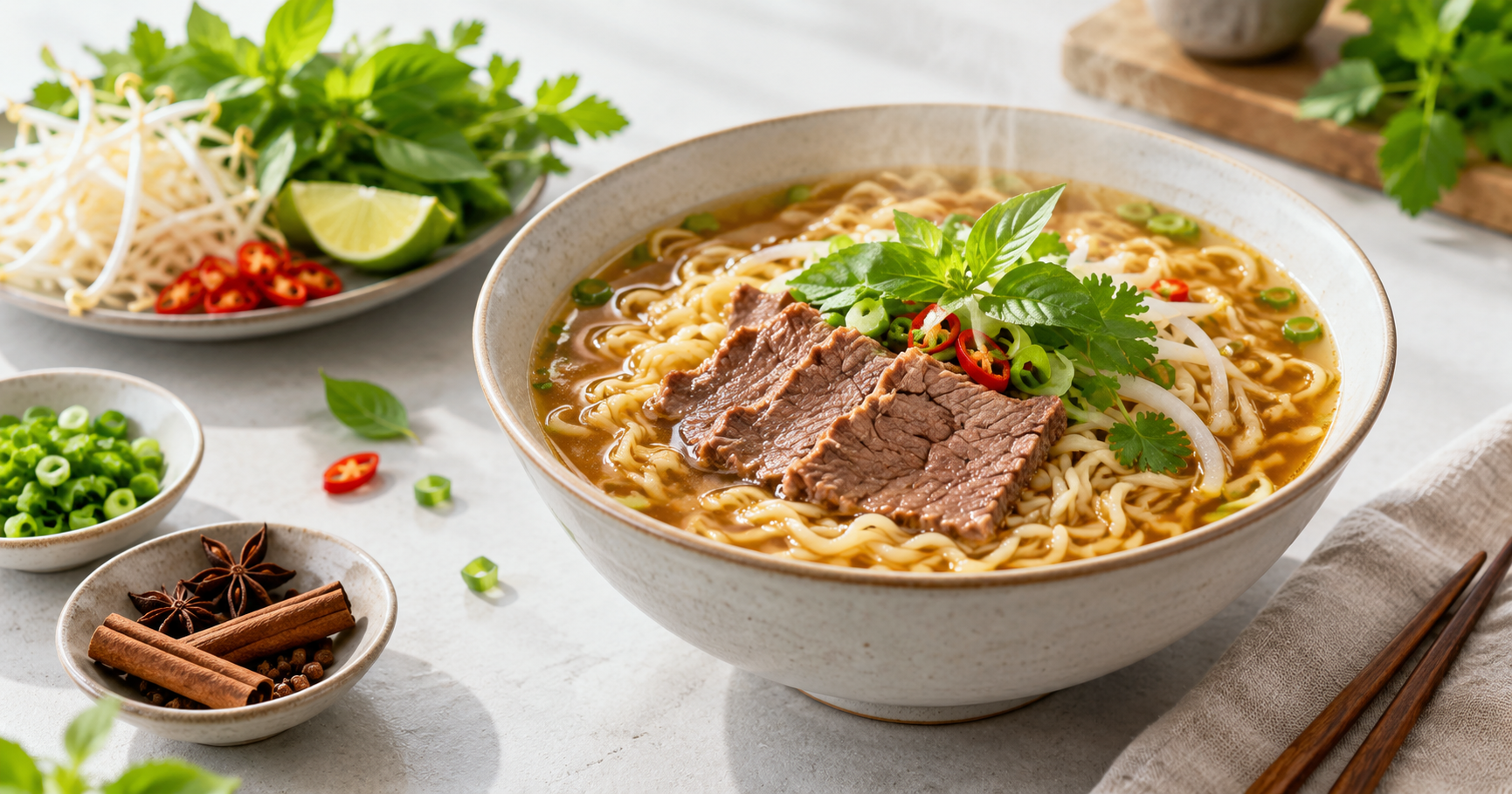
Are you looking for beef seasoning powder for instant noodles, soups, broths, frozen foods, processed meat, snacks, or other savory food applications?
For food manufacturers, choosing a suitable beef seasoning is not simply a matter of finding the product with the strongest beef aroma.
The seasoning needs to be evaluated according to the finished food, target flavor profile, processing conditions, and how it performs in the actual formulation.
If you are sourcing beef seasoning powder from China, providing clear project information before requesting samples can make supplier selection and sample development much more efficient.
What Food Products Can Use Beef Seasoning Powder?
Beef seasoning powder can be developed for many different savory food applications, including:
- instant noodles;
- soup noodles and dry noodles;
- soups;
- broths;
- frozen foods;
- processed meat products;
- snacks;
- and other savory foods.
However, a beef seasoning that performs well in soup noodles may not provide the same result in snacks or processed meat.
This is why buyers should clearly communicate the final application to the supplier from the beginning.
Not All Beef Flavor Profiles Are the Same
When a buyer says, “I need beef seasoning powder,” this information alone is usually not enough to define the target flavor.
Beef flavor can be developed in several different directions, for example:
- beef broth style;
- rich beef with stronger body;
- cooked beef;
- roasted beef;
- braised beef;
- savory beef;
- or a lighter and more balanced beef profile.
Two products may both be called “beef seasoning powder” but differ significantly in aroma, body, umami, meatiness, and aftertaste.
When requesting a sample, it is therefore more useful to describe the desired beef profile rather than only providing the product name.
What Is the Difference Between Beef Seasoning Powder and Beef Flavor Base?
Buyers sometimes confuse beef seasoning powder with beef flavor base, but the two can perform different functions in a food formulation.
Beef seasoning powder is generally used to build a relatively complete taste profile, including saltiness, umami, spices, and beef character.
A Beef Flavor Base may focus more on:
- body;
- savory depth;
- meatiness;
- broth character;
- and overall flavor foundation.
In some formulations, beef seasoning powder and beef flavor base can be used together rather than replacing one another.
The correct choice depends on what function the ingredient needs to perform in the finished food.
When Should Reaction Beef Flavor Be Considered?
If a product already has a clear beef taste but still lacks cooked, roasted, or grilled meat character, reaction beef flavor may be considered.
Reaction flavors can support characteristics such as:
- cooked notes;
- roasted notes;
- meaty notes;
- and other savory characteristics.
However, reaction beef flavor does not necessarily replace beef seasoning powder.
In many projects, seasoning blends, flavor bases, and Reaction Flavors can perform different roles within the same flavor system.
If You Have a Benchmark Product, Share the Reference Information
For many B2B food development projects, a benchmark is one of the most efficient ways to define the target flavor.
If you want to develop a product similar to an existing noodle, soup, snack, or other commercial food product, useful information includes:
- what the benchmark product is;
- which characteristics you want to keep;
- which characteristics you want to change;
- whether the beef flavor should be stronger or lighter;
- whether more body is required;
- whether cooked or roasted notes should be increased;
- and what type of aftertaste is preferred.
A benchmark should be used to define the flavor target. It does not necessarily mean copying the reference product exactly.
Can You Request Samples Without a Benchmark?
Yes. A project can still begin without a reference sample.
In this case, it is helpful to describe the application and flavor target as specifically as possible.
For example:
- beef soup noodles with a clear broth profile;
- rich beef flavor for dry noodles;
- beef soup with fuller body;
- beef seasoning for frozen foods;
- beef seasoning for processed meat;
- or a customized savory beef profile.
The more specific the description is, the easier it is for the supplier to select or develop a suitable sample.
What Information Should You Provide When Requesting a Beef Seasoning Sample?
When contacting a beef seasoning supplier, preparing the following information can help improve sample accuracy:
- Final product: instant noodles, soup, snacks, processed meat, frozen foods, or another application.
- Target beef profile: broth, cooked, roasted, savory, braised, or another direction.
- Benchmark: if available.
- What needs improvement: aroma, body, meatiness, umami, aftertaste, or flavor intensity.
- Production process: cooking, frying, baking, steaming, drying, retorting, or other processing steps.
- Target market: domestic or export market.
- Documentation requirements: if specific documents are needed, these should be confirmed in advance.
These details make supplier selection and sample development more targeted and reduce unnecessary trial-and-error.
Do Not Select Beef Seasoning Only by Smelling the Powder
A sample with a very strong beef aroma when the bag is opened does not automatically produce a better result in the finished product.
Once the seasoning is added to the formulation, its performance may be influenced by:
- water;
- oil and fat;
- protein;
- starch;
- salt and other seasoning ingredients;
- processing temperature;
- heating time;
- and the way the finished food is prepared or consumed.
For this reason, samples should be tested in the actual food product or under conditions that are as close as possible to the final application.
How to Test a Beef Seasoning Sample Before Approval
When a sample arrives, food manufacturers can follow a basic evaluation process:
- Evaluate the general aroma and taste direction of the sample.
- Add the sample to the actual food formulation.
- Compare it with the current product or benchmark.
- Evaluate aroma, body, meatiness, umami, and aftertaste.
- Test the product after the real heating or processing step.
- Record which characteristics need to be increased, reduced, or changed.
- Provide specific feedback to the supplier.
The final usage level should be confirmed through application testing for each individual product rather than applying the same dosage to every formulation.
Price per Kilogram Should Not Be the Only Purchasing Criterion
When comparing several beef seasoning suppliers, price is important, but it should not be the only factor.
Buyers should also evaluate:
- how well the seasoning fits the target application;
- whether the flavor profile can be adjusted;
- performance in the actual formulation;
- sample development support;
- product consistency;
- availability of required project documentation;
- and the total cost of the final seasoning system.
A lower-priced seasoning that does not achieve the target flavor may require additional ingredients or further formulation changes.
For this reason, the final evaluation should be based on performance in the finished food rather than unit price alone.
How to Choose a Beef Seasoning Supplier
When sourcing food seasonings, especially from an overseas supplier, buyers should evaluate more than the product catalog.
A suitable supplier should be able to discuss:
- the food product you are manufacturing;
- the target flavor profile;
- the benchmark product;
- problems in the current formulation;
- whether a seasoning blend, flavor base, or reaction flavor is more appropriate;
- and how the sample should be tested.
For customized projects, clear technical communication at the beginning can reduce unnecessary sample rounds and make development more efficient.
Beef Seasoning Powder from China for Food Manufacturers
For B2B food manufacturing projects, available savory flavor directions may include:
- beef seasoning powder;
- beef flavor base;
- reaction beef flavor;
- broth seasoning base;
- seasoning blends;
- and other customized savory solutions.
You can explore more product categories on our Products page or learn more about the company on the About Us page.
Looking for a Beef Seasoning Supplier or Sample?
If your company is sourcing beef seasoning powder for food manufacturing, you can provide:
- the product you are developing;
- the desired beef flavor profile;
- a benchmark if available;
- the manufacturing process;
- and the flavor problem you want to solve.
Based on the project information, we can discuss whether a seasoning blend, flavor base, reaction flavor, or combination may be more suitable before confirming the sample.
Contact us on WhatsApp to discuss your beef seasoning requirements.