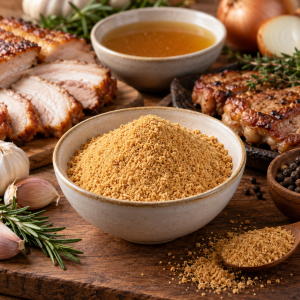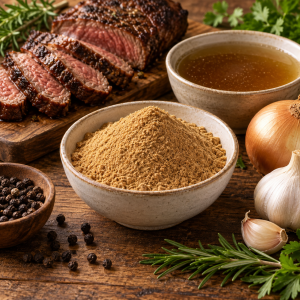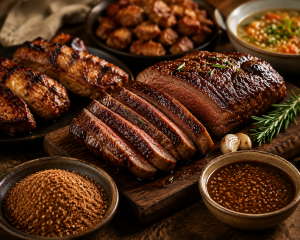
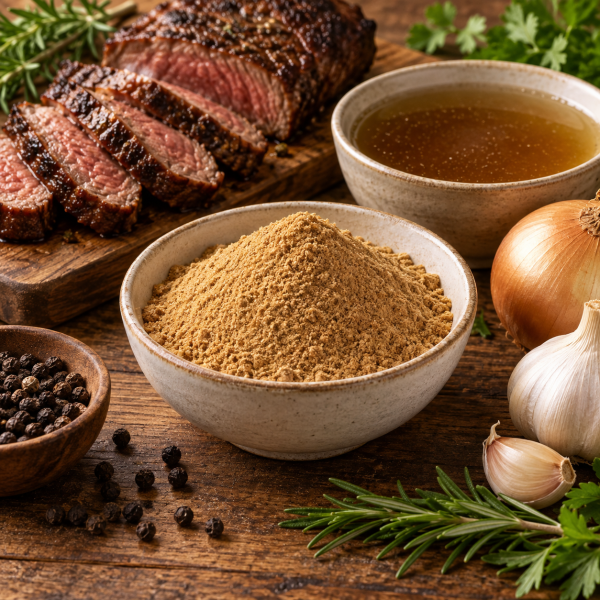
Grilled Beef Reaction Flavor is an application-focused savory flavor solution for burger patties and processed meat products that need a stronger cooked-beef, roasted and grilled sensory direction.
It is intended for food manufacturers that already have a basic seasoning system but still find the finished product too flat, too salty, or lacking the deeper grilled-beef character expected after heating.
The product should be evaluated inside the customer’s real formulation and cooking process. Final performance, dosage, format and specification are confirmed through application testing and sample approval rather than assumed from the product name alone.
What Problem Is This Flavor Designed to Solve?
A processed meat product can have enough salt and seasoning but still lack a convincing beef identity. Common sensory gaps include:
- weak roasted aroma after cooking;
- thin meat body in the middle of the bite;
- insufficient grilled or seared character;
- beef notes that fade during heating;
- a salty profile without enough cooked-meat depth;
- spices that are noticeable but not well integrated with the meat flavor.
Grilled Beef Reaction Flavor can be evaluated as one layer in a broader savory system to strengthen the cooked and roasted direction rather than simply increasing salt or generic seasoning intensity.
Typical Application Directions
This product direction can be evaluated for applications such as:
- burger patties;
- beef sausages and other processed meat products;
- meat fillings;
- formed meat products;
- savory meat seasonings;
- other cooked beef applications where a stronger roasted profile is required.
The final suitability depends on the customer’s formulation, heat process and target sensory profile.
Why Use a Reaction Flavor for a Grilled Beef Direction?
Reaction flavors are commonly used when the target is not only a generic beef note but a more cooked, roasted or grilled sensory character.
In burger patties, the desired flavor often includes several layers at the same time: beef body, roasted surface aroma, savory depth and a fatty cooked-meat impression. A reaction flavor can help reinforce the roasted and cooked components of that system.
For this reason, the product is usually evaluated together with the existing seasoning base rather than in isolation.
Build the Beef Profile in Layers
A fuller burger or processed-meat profile may combine:
- a base salty and savory layer;
- meat-body flavor;
- grilled or roasted reaction flavor;
- umami support;
- fatty beef character;
- onion, garlic, pepper or other background seasoning.
The exact balance depends on the target product. If the first aroma is weak, the formulation may need more roasted top-note support. If the aroma is acceptable but the bite feels thin, the meat-body layer may need more attention.
Application Testing After Real Heat Processing
Reaction flavors should be judged after the actual cooking process used by the customer whenever possible.
A sample that smells strong before cooking can behave differently after grilling, frying, steaming or industrial thermal processing. For meaningful evaluation, the trial should reproduce the real application conditions as closely as possible.
During testing, manufacturers can compare:
- first aroma after cooking;
- roasted and grilled character;
- beef body through the bite;
- salt perception;
- savory depth;
- aftertaste;
- how well the flavor remains integrated with the spice system.
Benchmark Matching for Burger and Meat Applications
If you already have a target burger patty, seasoning, finished meat product or competitor reference, send the physical sample or detailed reference information with your inquiry.
A benchmark allows the development discussion to become more specific. Instead of asking only for a “strong beef flavor,” the project can focus on which characteristics need to be matched, strengthened or changed.
Useful project information includes:
- the finished application;
- current seasoning or flavor system;
- heat process;
- target market;
- desired grilled-beef intensity;
- reference sample if available;
- any cost or formulation constraints that need to be considered.
Sample Development Before Bulk Production
For B2B food projects, the recommended process is to confirm the application target first and then evaluate samples in the real formulation.
A practical project flow is:
- describe the current flavor problem;
- provide the application and heat process;
- share a benchmark or target sensory description;
- evaluate suitable grilled beef reaction flavor samples;
- test in the real food system;
- compare sensory results;
- confirm the selected direction before commercial production.
This reduces the risk of choosing a flavor only from a specification sheet or aroma test outside the finished food.
Not Just “More Beef” — Define the Target
“Stronger beef” can mean different things to different customers. One customer may want a charred grill note, another may want a deeper cooked-meat body, and another may need the beef identity to survive heat processing more clearly.
When requesting samples, describe the target as precisely as possible. This helps Zhongxinsheng Flavor select or adjust the flavor direction more efficiently.
For Food Manufacturers and R&D Teams
This product page is intended for food manufacturers, R&D teams, seasoning companies and B2B buyers developing commercial burger patties and processed meat products.
We do not recommend choosing a reaction flavor only by a generic catalog name. The more useful approach is to evaluate the flavor inside the customer’s real application and compare it against the intended sensory target.
Discuss a Grilled Beef Flavor Project with Zhongxinsheng
If your burger patty or processed meat product has enough salt but still lacks roasted beef impact, send us the application, current problem, target flavor direction and any reference sample available.
Zhongxinsheng Flavor can discuss suitable beef reaction flavor directions, application testing and sample comparison for your project before bulk production.