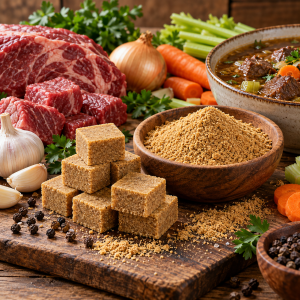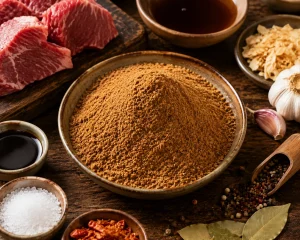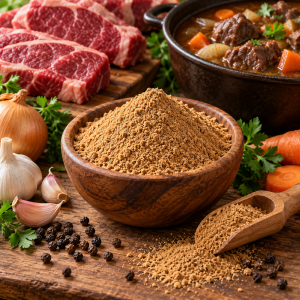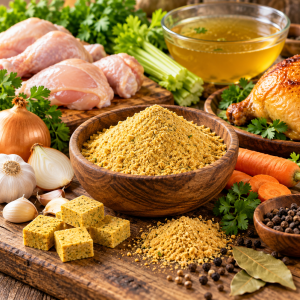
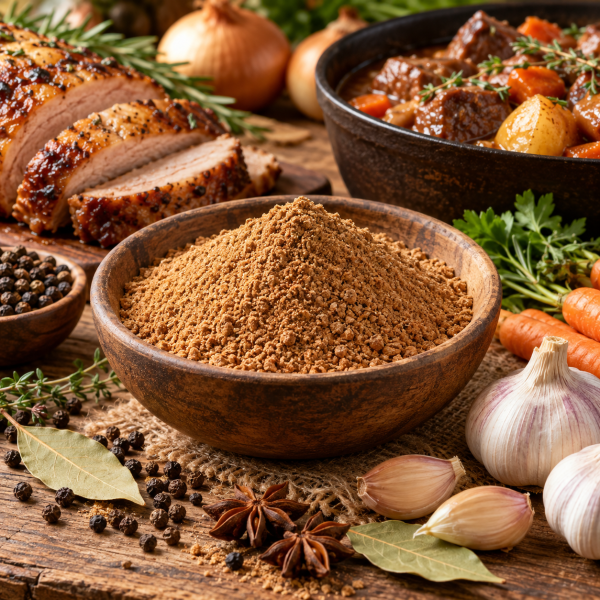
Savory Meat Flavor Enhancer is a compound savory seasoning solution developed for commercial food manufacturing applications that require stronger meat character, fuller savory taste and improved overall flavor body.
It can be evaluated for sausages, meatballs, cooked meat, prepared meat products, meat fillings, frozen foods and other savory applications where the existing formulation lacks sufficient meat impact, umami depth or flavor continuity.
Unlike a single flavor enhancer or an individual meat flavor ingredient, this type of product is intended to support several parts of the finished taste profile at the same time.
The suitable direction depends on the finished product, meat type, processing method, target market and the specific sensory problem the manufacturer is trying to solve.
Typical Applications
Savory Meat Flavor Enhancer may be evaluated for commercial food applications such as:
- Sausages
- Meatballs
- Ham and cooked meat
- Processed pork products
- Processed beef products
- Prepared poultry products
- Meat fillings
- Frozen meat products
- Ready-to-cook meat products
- Ready-to-eat meat products
- Braised and sauce-braised meat
- Compound meat seasoning systems
- Other savory food applications
Final suitability should be confirmed through testing in the buyer’s actual formulation and processing conditions.
What Does Savory Meat Flavor Enhancer Do?
In a processed meat or savory food formulation, this type of product may help strengthen the overall meat and savory profile rather than only increasing aroma.
Depending on the selected product and application, it may support:
- Meat flavor intensity
- Savory and umami impact
- Flavor body
- Cooked meat character
- Overall richness
- Flavor continuity after processing
- Integration with spices and other seasonings
- Longer or fuller aftertaste
The exact sensory effect depends on the actual product, formulation and processing conditions.
What Problems Can It Help Address?
Food manufacturers may evaluate a savory meat flavor enhancer when the current product has problems such as:
- Meat flavor is too weak
- The product tastes salty but lacks richness
- Savory impact is insufficient
- Cooked meat character is not clear enough
- The flavor becomes weak after heating
- The finished product lacks body
- The aftertaste is too short
- The meat profile does not integrate well with the spice system
Identifying the exact sensory problem is important because different flavor issues may require different product directions.
Savory Meat Flavor Enhancer vs. Processed Meat Seasoning
Savory Meat Flavor Enhancer and Processed Meat Seasoning should not automatically be treated as the same product.
Processed Meat Seasoning normally provides a broader seasoning structure that may include salt balance, spices, meat character, savory taste and the overall flavor profile required by the finished product.
Savory Meat Flavor Enhancer is more focused on strengthening meat impact, savory depth, flavor body and overall taste performance inside an existing formulation.
For example, a manufacturer may already have an established sausage spice system but feel that the finished product lacks meat richness and savory depth. In this situation, a meat flavor enhancer may be evaluated without replacing the complete seasoning system.
Savory Meat Flavor Enhancer vs. Meat Flavor Powder
Meat flavor powder is generally more focused on expressing a particular meat aroma or flavor character.
A savory meat flavor enhancer may have a broader role in the taste system by supporting both meat perception and savory depth.
Depending on the formulation, the two types of products may also be used for complementary purposes.
The correct choice depends on whether the main problem is weak meat aroma, insufficient savory body, short aftertaste or an overall lack of flavor fullness.
Not the Same as a Single Flavor Enhancer
This product should not automatically be treated as a single flavor-enhancing ingredient such as MSG or another individual taste enhancer.
A compound savory meat flavor enhancer is intended to work as part of a broader meat and savory taste system.
The actual composition and function should be confirmed according to the specific product supplied.
For Sausage Applications
In sausage products, a savory meat flavor enhancer may be evaluated when the existing seasoning system provides adequate salt and spices but the finished product still lacks sufficient meat character or savory depth.
Typical evaluation points may include:
- Meat taste after cooking
- Savory intensity
- Flavor body
- Integration with pepper, garlic and other spices
- Performance in the meat matrix
- Aftertaste
Different sausage styles require different flavor directions, so the target product should be described clearly before sample selection.
For Meatball Applications
Meatballs may contain meat, fat, starch, water, seasoning and other ingredients that can dilute or change flavor perception.
A savory meat flavor enhancer may be evaluated when the finished meatball lacks enough meat impact or tastes flat after cooking.
Testing should be carried out in the actual formulation because moisture, fat content and cooking conditions can significantly affect the result.
For Cooked and Prepared Meat Products
Cooked meat, prepared meat and ready-to-eat meat products may lose part of their flavor intensity during heating and processing.
Depending on the application, a savory meat flavor enhancer may help support stronger cooked meat character, savory depth and a fuller finished taste.
The product should be evaluated after the complete commercial-style heating process.
For Braised and Sauce-Braised Meat
Braised meat products normally contain multiple taste elements such as salt, sugar, soy-based seasonings, spices and meat flavor components.
In these systems, the role of a savory meat flavor enhancer may be to support meat body and savory depth without overpowering the sauce or spice profile.
The correct balance should be evaluated according to the target regional flavor style.
For Meat Fillings
Savory Meat Flavor Enhancer may also be evaluated for meat fillings used in dumplings, buns, pastries or other prepared foods.
These applications may require a noticeable meat profile even when the filling also contains vegetables, starch, oil and seasonings.
The flavor should be evaluated after the final cooking process rather than only in the raw filling.
For Frozen Meat Products
Frozen foods can present additional challenges because freezing, storage and reheating may affect flavor perception.
Manufacturers should evaluate whether the meat and savory profile remains satisfactory after the complete freeze-thaw and preparation process.
For New Product Development
For a new processed meat or savory food project, an available product direction may be used as a starting point for sample evaluation.
Useful project information may include:
- Finished product type
- Meat species
- Target market
- Desired meat and savory profile
- Current seasoning system
- Processing method
- Benchmark product, if available
- Expected purchasing volume
- Required technical or certification documents
This information helps the supplier understand what role the flavor enhancer needs to play in the formulation.
For Existing Product Improvement
This type of product may be especially useful when the manufacturer already has a stable formulation but wants to improve sensory performance.
For example, the existing product may have acceptable salt and spice balance but still lack:
- meat richness;
- savory depth;
- cooked meat character;
- flavor after heating;
- overall body;
- or sufficient aftertaste.
Clear feedback on the current product helps make sample selection more efficient.
Why Application Testing Is Important
Savory Meat Flavor Enhancer should preferably be evaluated in the actual finished food rather than only by tasting the dry powder.
Flavor performance can change significantly inside a meat or savory food system.
Factors that may influence the final result include:
- Meat type
- Fat content
- Water content
- Protein
- Starch
- Salt
- Spices
- Other savory ingredients
- Heating temperature
- Processing time
- Storage and reheating conditions
Testing under conditions close to commercial production provides a more realistic evaluation of product performance.
What Should Buyers Evaluate During Sample Testing?
During application testing, food manufacturers may evaluate:
- Meat character
- Savory and umami intensity
- Flavor body
- Cooked meat notes
- Integration with spices
- Performance after heating
- Aftertaste
- Off-notes
- Similarity to the target benchmark
Specific feedback is more useful than simply requesting a stronger sample.
For example, “the meat aroma is acceptable, but we need more savory body and a longer aftertaste after cooking” gives the supplier a much clearer development direction.
Can It Be Used Together with Other Seasonings?
Depending on the finished formulation, a savory meat flavor enhancer may be used as one component within a broader seasoning system.
It may work together with spices, compound seasonings, meat flavor products or other savory ingredients according to the target result.
The actual combination and usage should be determined through application testing rather than assumed in advance.
What Information Should Buyers Confirm Before Ordering?
Before commercial purchasing, buyers should confirm the actual product and supply conditions with the supplier.
Depending on the project, this may include:
- Product specification
- Ingredient information
- Available technical documents
- Sample availability
- Packaging options
- Minimum order quantity
- Price
- Production lead time
- Export documentation
- Application support
These conditions depend on the actual product and supply source and should be confirmed before ordering.
Halal and Other Certification Requirements
If the target market requires Halal or another specific certification, buyers should communicate this requirement before sample approval and commercial ordering.
The exact product, certified entity, certificate validity, product coverage, certification body and acceptance in the destination market should be confirmed according to the actual supply source.
A supplier having a Halal certificate does not automatically mean that every meat flavor enhancer is included within the certified scope.
Packaging, MOQ and Commercial Conditions
Packaging, minimum order quantity, pricing, production lead time and other commercial conditions vary according to the selected product and supply arrangement.
Buyers can provide their expected purchasing volume, destination country and project requirements so that the relevant commercial information can be confirmed accurately.
Looking for Savory Meat Flavor Enhancer from China?
ZXS Flavors works with seasoning and savory flavor solutions for commercial food manufacturing.
If you are developing sausages, meatballs, cooked meat, prepared meat, meat fillings, frozen meat products or other savory foods and need stronger meat character, savory depth or flavor body, send us your application, processing method, target profile and sample requirements.
We can review the project and discuss suitable product directions according to the actual food application and available supply source.
Contact ZXS Flavors to request product information, discuss samples or talk about your savory meat flavor enhancement project.