
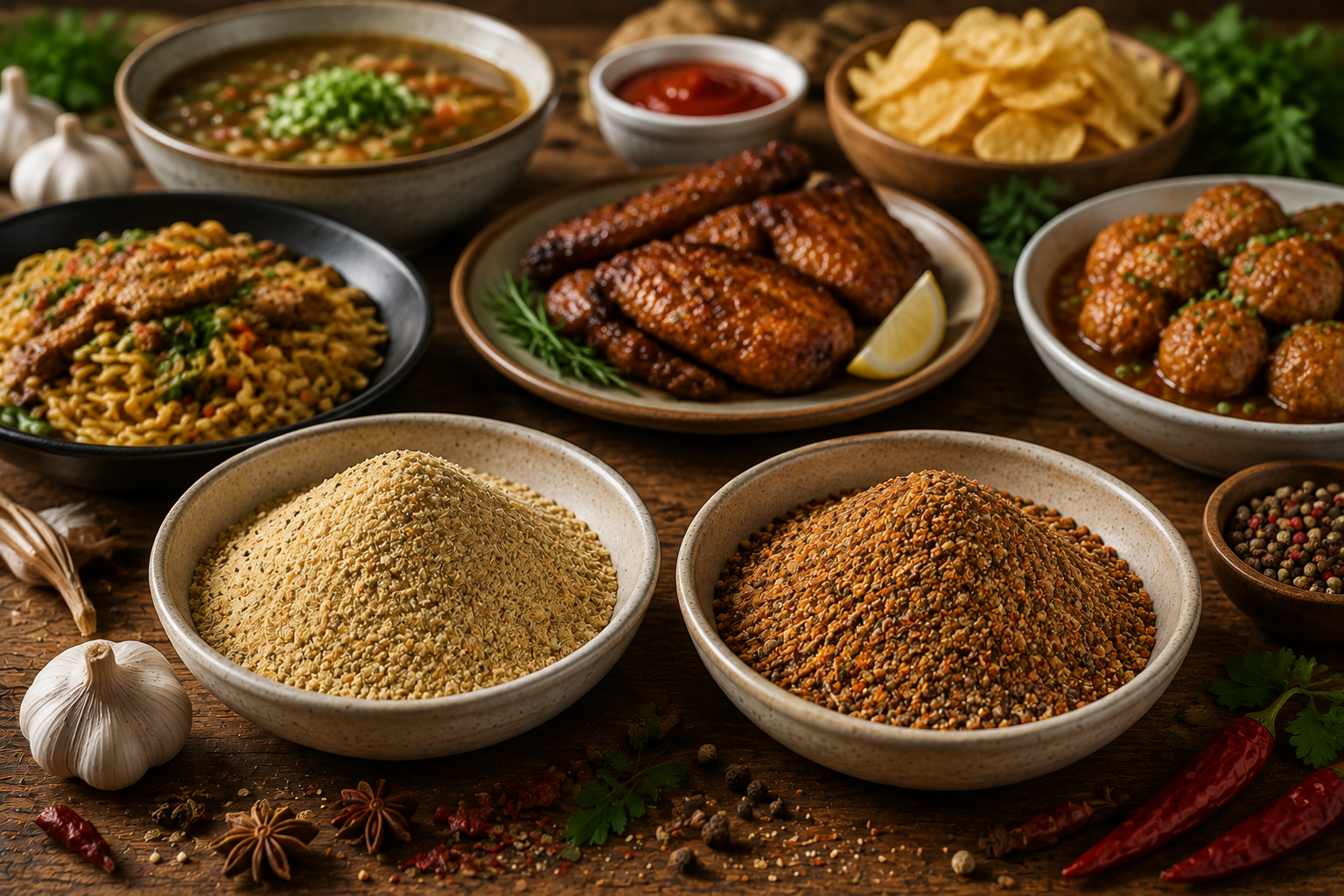
In savory food development, selecting the right flavor solution is an important part of creating a successful finished product.
Food manufacturers often compare different flavor systems, especially when deciding between reaction flavors and flavor bases.
Although both can contribute to savory flavor development, they serve different purposes in a complete food flavor system.
Understanding the difference between reaction flavor and flavor base can help food manufacturers choose more suitable solutions for their applications.
What Is a Flavor Base?
A flavor base is a flavor system designed to provide a broader foundation for the overall taste profile of a food product.
It can help build characteristics such as:
- Savory depth
- Flavor body
- Overall taste foundation
- Balanced background notes
- Product-specific flavor direction
Flavor bases are often used when manufacturers need to establish the main flavor identity of a product.
For example, different food applications may require different flavor foundations depending on whether the target product is meat-based, soup-based, snack-based or sauce-based.
Learn more about our Flavor Bases solutions for food manufacturing applications.
What Is a Reaction Flavor?
A reaction flavor is a flavor system developed to provide specific cooked, roasted or thermal flavor characteristics.
Reaction flavors are commonly associated with sensory directions such as:
- Roasted notes
- Cooked meat characteristics
- Grilled aroma
- Deep savory aroma
- Thermal reaction profiles
They are often considered when food manufacturers need to enhance specific aroma characteristics that are difficult to achieve through seasoning balance alone.
Explore our Reaction Flavors category for related flavor solutions.
Key Differences Between Reaction Flavor and Flavor Base
| Aspect | Flavor Base | Reaction Flavor |
|---|---|---|
| Main Role | Builds overall flavor foundation | Provides specific cooked or roasted aroma characteristics |
| Focus | Flavor body and balance | Thermal, roasted and cooked flavor notes |
| Application | Creates broader product flavor identity | Enhances specific aroma directions |
| Development Goal | Overall taste structure | Specific sensory character |
How Food Manufacturers Use Them Together
Reaction flavors and flavor bases do not necessarily replace each other.
In many savory food applications, manufacturers may use different flavor components together to create a more complete flavor system.
A possible approach may include:
- Flavor Base for overall savory foundation
- Reaction Flavor for cooked or roasted aroma characteristics
- Seasoning Blend for final taste balance and seasoning control
The most suitable combination depends on the finished food application, target flavor profile and processing conditions.
Applications in Savory Food Manufacturing
Reaction flavors and flavor bases may be evaluated in different food categories, including:
- Instant noodles
- Soups and broths
- Sauces
- Snack foods
- Processed meat products
- Prepared foods
- Frozen foods
However, each application has different requirements for aroma release, flavor intensity and overall balance.
Why Application Testing Matters
A flavor solution should be evaluated in the actual finished food system rather than only as a standalone ingredient.
Food manufacturers may need to consider:
- Processing temperature
- Cooking method
- Moisture level
- Oil content
- Other seasoning components
- Target consumer preference
Application testing helps determine whether a flavor solution performs correctly in the final product.
Choosing the Right Flavor Solution from China
When selecting a flavor supplier, food manufacturers should consider more than the product name.
A suitable supplier should understand:
- Target food application
- Flavor development objective
- Processing conditions
- Expected sensory profile
- Product customization requirements
As a China savory flavor supplier, ZXS Flavors focuses on compound seasonings, flavor bases, reaction flavors and application-oriented savory solutions for food manufacturers.
Different flavor solutions can be discussed according to customer applications and development requirements.
Explore our food seasoning products or contact our team through WhatsApp for flavor development discussions.
Conclusion
Reaction flavors and flavor bases play different but complementary roles in savory food development.
Flavor bases help create the overall flavor foundation, while reaction flavors contribute specific cooked, roasted and thermal flavor characteristics.
For food manufacturers, understanding the difference between these flavor solutions can help create more balanced and application-focused food products.