
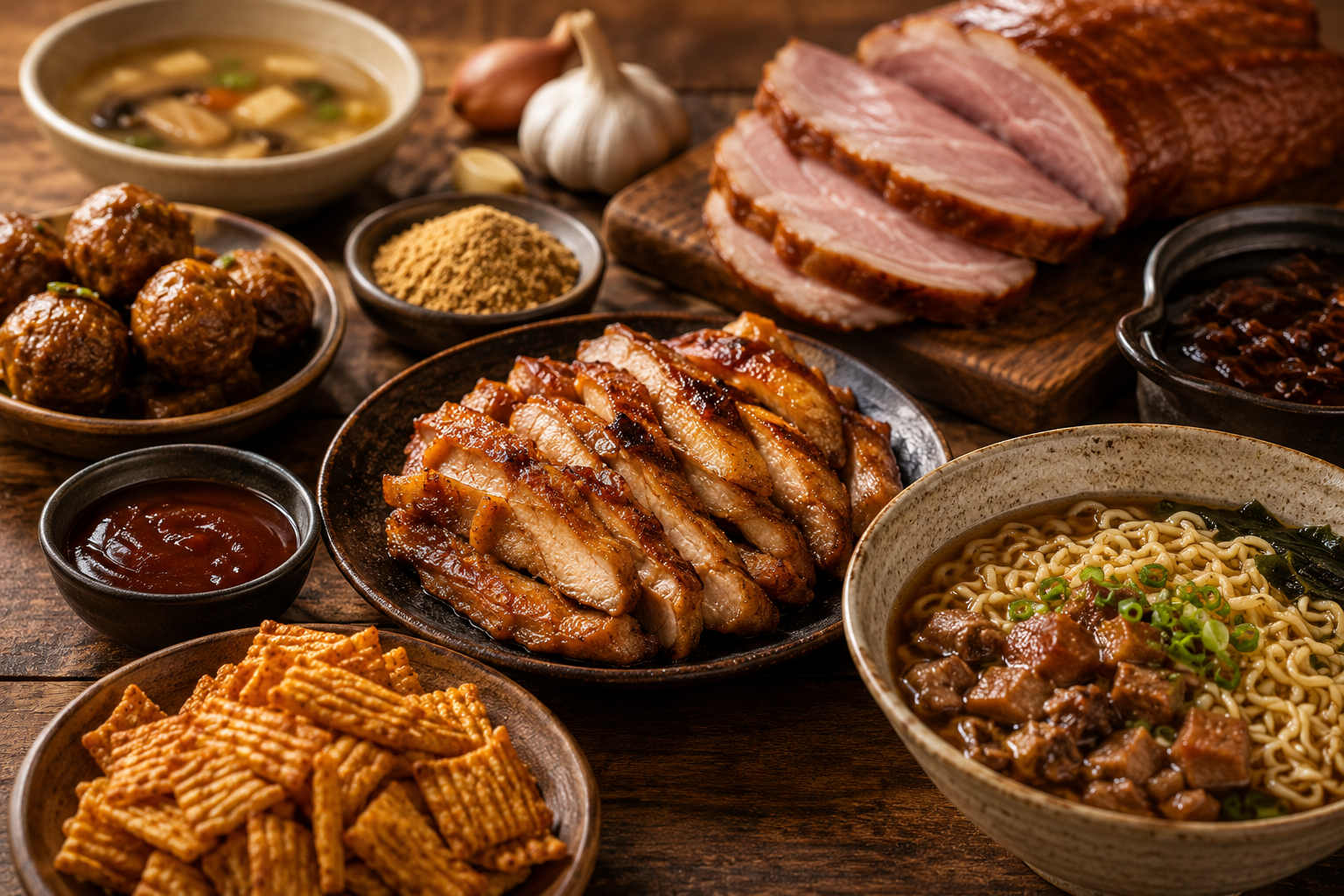
Food manufacturers developing roasted, cooked, meaty or deep savory flavor profiles often need more than a standard seasoning blend.
Maillard reaction flavor is one of the flavor directions used in savory food development to help build cooked, roasted and complex flavor characteristics in finished food products.
However, selecting a reaction flavor is not simply about choosing a flavor name. The final food application, processing method, existing formulation and target sensory profile can all influence how the flavor performs.
This guide explains the key factors food manufacturers should consider when evaluating Maillard reaction flavors for savory food applications.
What Is Maillard Reaction Flavor?
Maillard reaction flavor refers to a flavor system developed through controlled reactions involving amino compounds and reducing sugars under suitable processing conditions.
These reactions can generate complex aroma and flavor characteristics commonly associated with cooked, roasted and savory foods.
Depending on the formulation and target profile, reaction flavors may be developed toward different sensory directions such as:
- Roasted meat-style notes
- Cooked meat-style character
- Deep savory aroma
- Roasted or grilled characteristics
- Broth-like savory depth
- Other cooked-food flavor directions
Food manufacturers can explore our Reaction Flavors category for related flavor directions.
1. Start with the Target Flavor Profile
The first step in selecting a reaction flavor is defining the desired finished-food character.
Descriptions such as “meaty” or “roasted” can still represent very different flavor targets.
Food manufacturers may need to clarify whether the product should emphasize:
- Roasted aroma
- Cooked meat character
- Savory depth
- Grilled notes
- Broth-like richness
- Longer aftertaste
- A stronger or softer overall flavor profile
A clear target profile helps make sample development and application testing more efficient.
2. Consider the Final Food Application
The same reaction flavor may perform differently depending on the food system in which it is used.
Typical savory applications may include:
- Instant noodles
- Soups and broths
- Sauces
- Snack foods
- Processed meat products
- Prepared foods
- Frozen foods
- Other savory applications
For example, a flavor used in a dry snack seasoning system may require different sensory characteristics from one used in a soup, sauce or processed meat product.
For this reason, reaction flavor selection should begin with the actual food application rather than with the flavor name alone.
3. Reaction Flavor vs. Seasoning Blend
Reaction flavors and seasoning blends play different roles in a food flavor system.
A Seasoning Blend generally helps build the overall taste profile through elements such as savory taste, saltiness, spice, sweetness and aroma balance.
A reaction flavor is more focused on developing specific cooked, roasted or deep savory aromatic characteristics.
In many applications, the two can work together.
For example, the reaction flavor may contribute roasted or cooked character, while the seasoning blend helps control the broader taste balance of the finished product.
4. Reaction Flavor vs. Flavor Base
Reaction flavors can also be distinguished from Flavor Bases.
A flavor base is generally used to establish a broader flavor foundation or savory body within the finished product.
A reaction flavor may be used to contribute more specific thermal, roasted or cooked aroma characteristics.
Depending on the application, manufacturers may combine a flavor base, reaction flavor and seasoning blend as different layers of the overall flavor system.
The exact combination should be evaluated according to the finished food formulation and target sensory profile.
5. Consider Processing Conditions
Processing conditions can influence the final sensory performance of a reaction flavor.
Food manufacturers may need to consider whether the finished product will undergo:
- Boiling
- Cooking
- Frying
- Roasting
- Drying
- Mixing
- Freezing
- Reheating
Heat, moisture, oil content and processing time can all affect how aroma is perceived in the finished food.
Therefore, flavor evaluation should be carried out under conditions that are as close as possible to the actual production and preparation process.
6. Evaluate the Complete Food Formulation
A reaction flavor does not work independently from the rest of the food formulation.
Ingredients already present in the product may influence aroma release, savory balance and overall flavor perception.
Manufacturers may need to consider factors such as:
- Salt level
- Sugar level
- Oil or fat content
- Protein ingredients
- Spices
- Acidity
- Moisture
- Other flavor and seasoning components
This is why tasting a reaction flavor alone may not accurately predict how it will perform in the finished food.
7. Test Reaction Flavor in the Real Application
Application testing is one of the most important steps when evaluating reaction flavors.
Whenever possible, manufacturers should add the sample to the actual product formulation and use the intended processing method.
During application testing, manufacturers may evaluate:
- Roasted or cooked aroma strength
- Savory depth
- Flavor integration
- Aroma after processing
- Aftertaste
- Compatibility with other seasoning components
- Overall finished-product balance
Feedback from the finished application can then be used to guide further flavor adjustment.
8. Avoid Evaluating Reaction Flavor Only by Strength
A stronger aroma does not necessarily create a better finished product.
For industrial food development, balance and integration are often more important than maximum flavor intensity.
If the reaction flavor dominates the product, it may reduce the clarity of other seasoning components.
Manufacturers should therefore evaluate whether the flavor supports the intended product identity rather than simply making the aroma stronger.
9. Custom Reaction Flavor Development
Different food manufacturers may require different reaction flavor profiles even when developing similar food categories.
Customization may consider:
- Target cooked or roasted character
- Food application
- Desired aroma intensity
- Savory depth
- Processing conditions
- Existing flavor system
- Target market preference
Specific flavor profiles, product specifications and application requirements should be confirmed according to the actual customer project.
Reaction Flavors in a Complete Savory Flavor System
For many food manufacturers, reaction flavor is most useful when treated as one part of a complete savory flavor system.
A product development approach may combine:
- Flavor Bases for flavor foundation and savory body
- Reaction Flavors for cooked, roasted or thermal flavor character
- Seasoning Blends for overall taste and seasoning balance
The role of each component depends on the finished food product and development objective.
Working with a China Reaction Flavor Supplier
When sourcing reaction flavors from China, food manufacturers should evaluate more than a sample aroma or product name.
A suitable supplier should understand the intended food application, processing conditions, target flavor profile and application testing requirements.
Zhongxinsheng Flavor Co., Ltd. provides compound seasonings, flavor bases, reaction flavor directions and savory flavor solutions for food manufacturers, importers and distributors.
Flavor solutions can be discussed and adjusted according to application requirements and customer development needs, subject to final product confirmation.
Explore our Reaction Flavors or view our seasoning and flavor products to learn more about our product directions.
Conclusion
Maillard reaction flavor can help food manufacturers develop cooked, roasted and deeper savory flavor characteristics, but successful application depends on more than selecting a flavor name.
The target flavor profile, finished food application, processing conditions, complete formulation and application testing should all be considered.
By evaluating reaction flavors as part of the complete food flavor system, manufacturers can develop more balanced and application-focused savory products.