
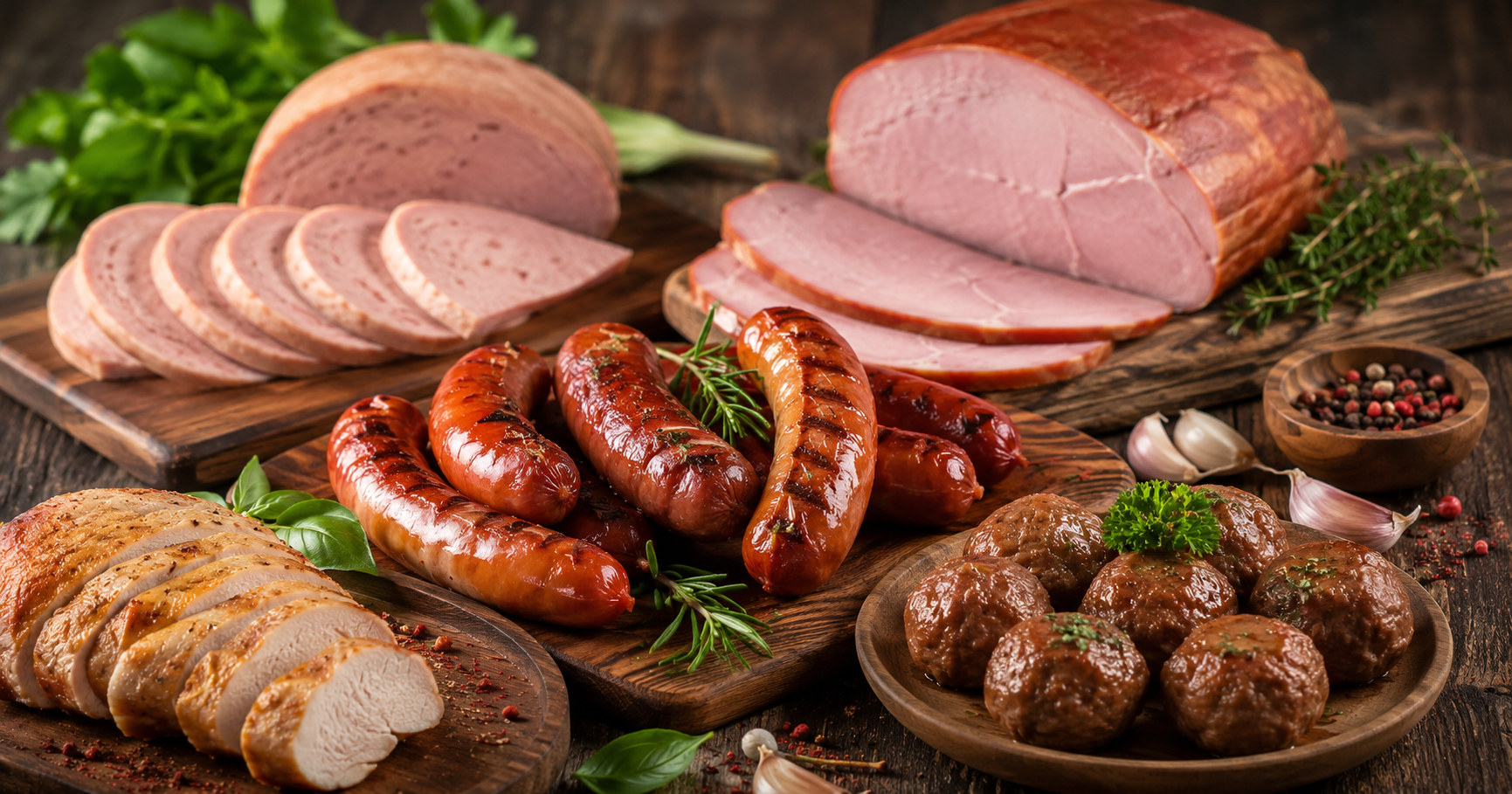
Processed meat products require seasoning systems that work together with meat type, fat content, processing method and the desired finished flavor.
For food manufacturers, choosing the right processed meat seasoning involves more than selecting a standard meat flavor. Saltiness, savory depth, aroma, spice balance, processing conditions and the characteristics of the meat base can all influence the final result.
This guide explains the key factors food manufacturers should consider when developing seasoning solutions for processed meat products.
What Is Processed Meat Seasoning?
Processed meat seasoning is a compound seasoning solution developed for meat products that undergo formulation, mixing, marination, cooking, frying, freezing or other industrial processing steps.
Depending on the application, the seasoning may be designed to support:
- Savory depth
- Meat-style flavor
- Salt balance
- Spice profile
- Roasted or cooked aroma
- Aftertaste
- Overall flavor consistency
Food manufacturers can also explore our Seasoning Blends for broader compound seasoning applications.
1. Start with the Type of Meat Product
The first step in seasoning development is understanding the finished meat product.
Different applications may require very different seasoning structures.
Typical processed meat applications may include:
- Sausages
- Meatballs
- Processed chicken products
- Prepared beef products
- Prepared pork products
- Frozen meat products
- Marinated meat products
- Other savory processed meat foods
A seasoning designed for sausage production may not perform in the same way when used in fried chicken, meatballs or frozen prepared meat products.
2. Consider the Meat Base
The characteristics of the meat itself can significantly influence seasoning performance.
Manufacturers may need to consider:
- Meat type
- Fat content
- Protein content
- Moisture level
- Existing ingredients in the formulation
- Desired finished texture
Fat and moisture can change the way salt, aroma and savory flavor are perceived in the finished product.
For this reason, seasoning should be evaluated as part of the complete meat formulation rather than as an isolated ingredient.
3. Build the Right Savory Flavor Balance
Savory intensity is important in processed meat products, but stronger flavor does not automatically mean better flavor.
A balanced seasoning system may need to coordinate:
- Initial savory impact
- Meat-style character
- Saltiness
- Spice intensity
- Aroma
- Flavor depth
- Aftertaste
For products requiring additional savory or meat-style characteristics, manufacturers may also evaluate customized Flavor Bases as part of the overall flavor system.
4. Match the Seasoning with the Processing Method
Processing conditions can change how seasoning performs in the finished meat product.
Manufacturers should consider whether the product will be:
- Marinated
- Mixed
- Cooked
- Steamed
- Fried
- Roasted
- Frozen
- Reheated
Heat can affect aroma perception, while freezing and reheating may change the way flavor is experienced in the final product.
This makes real application testing an important part of seasoning development.
5. Evaluate Salt and Spice Balance
Processed meat formulations often contain multiple ingredients that contribute to saltiness, spice and overall flavor.
When developing seasoning, manufacturers should evaluate the complete formulation to avoid excessive or unbalanced flavor.
Depending on the product, adjustment may focus on:
- Salt intensity
- Pepper or spice level
- Garlic or onion character
- Chili intensity
- Savory depth
- Roasted notes
The target should be a balanced finished product rather than a seasoning powder that tastes strong on its own.
6. Consider Aroma After Cooking
Aroma is an important part of processed meat flavor, especially after cooking, frying or roasting.
Some aroma characteristics may become more noticeable during heating, while others may become weaker.
Food manufacturers should therefore evaluate seasoning under the intended processing conditions whenever possible.
For products requiring roasted or cooked meat characteristics, the overall seasoning system may also be developed together with suitable savory or reaction flavor solutions.
7. Test the Seasoning in the Finished Meat Product
Application testing is essential for processed meat seasoning development.
Tasting seasoning powder alone cannot fully predict how it will perform after mixing with meat, fat, water and other ingredients.
Manufacturers should test seasoning in the intended formulation and processing method.
During evaluation, manufacturers may compare:
- Flavor before and after processing
- Savory intensity
- Aroma after cooking
- Salt balance
- Spice balance
- Aftertaste
- Overall compatibility with the meat base
8. Adjust the Flavor According to the Target Market
Processed meat products sold in different markets may require different flavor profiles.
Some markets may prefer stronger spice and savory intensity, while others may require a milder or cleaner flavor profile.
Seasoning development can therefore be adjusted according to:
- Target country or region
- Product positioning
- Consumer flavor preference
- Meat application
- Processing method
This is one reason customized seasoning development can be useful for food manufacturers serving multiple markets.
9. Consider Frozen Processed Meat Applications
Many processed meat products are distributed and stored frozen.
In these applications, seasoning should be evaluated after freezing and after the intended cooking or reheating process.
Manufacturers developing frozen meat products can also review our Frozen Food Seasoning solutions for broader frozen food applications.
10. Custom Seasoning Development for Processed Meat
Standard seasoning products may be suitable for initial product evaluation, but commercial meat products often require further adjustment.
Custom seasoning development may focus on:
- Target meat flavor
- Savory strength
- Spice profile
- Aroma direction
- Processing conditions
- Finished product characteristics
- Target market requirements
Any final formulation, specification or application requirement should be confirmed according to the actual customer project.
Working with a China Processed Meat Seasoning Supplier
When sourcing processed meat seasoning from China, food manufacturers should evaluate the supplier’s understanding of the final application rather than comparing only flavor names or price.
A suitable seasoning partner should be able to discuss the meat application, processing method, target flavor profile and sample evaluation requirements.
Zhongxinsheng Flavor Co., Ltd. provides compound seasonings, application seasonings and savory flavor solutions for food manufacturers, importers and distributors.
Seasoning profiles can be adjusted according to food application and customer development requirements, subject to final product confirmation.
Explore our Application Seasonings or view our seasoning and flavor products to learn more.
Conclusion
Processed meat seasoning development requires an understanding of the complete food system.
Meat type, fat content, savory balance, spice profile, cooking conditions, freezing and target market preferences can all influence the final flavor.
By testing seasoning in the real meat application and adjusting the flavor according to processing and market requirements, food manufacturers can develop more application-focused seasoning solutions.