
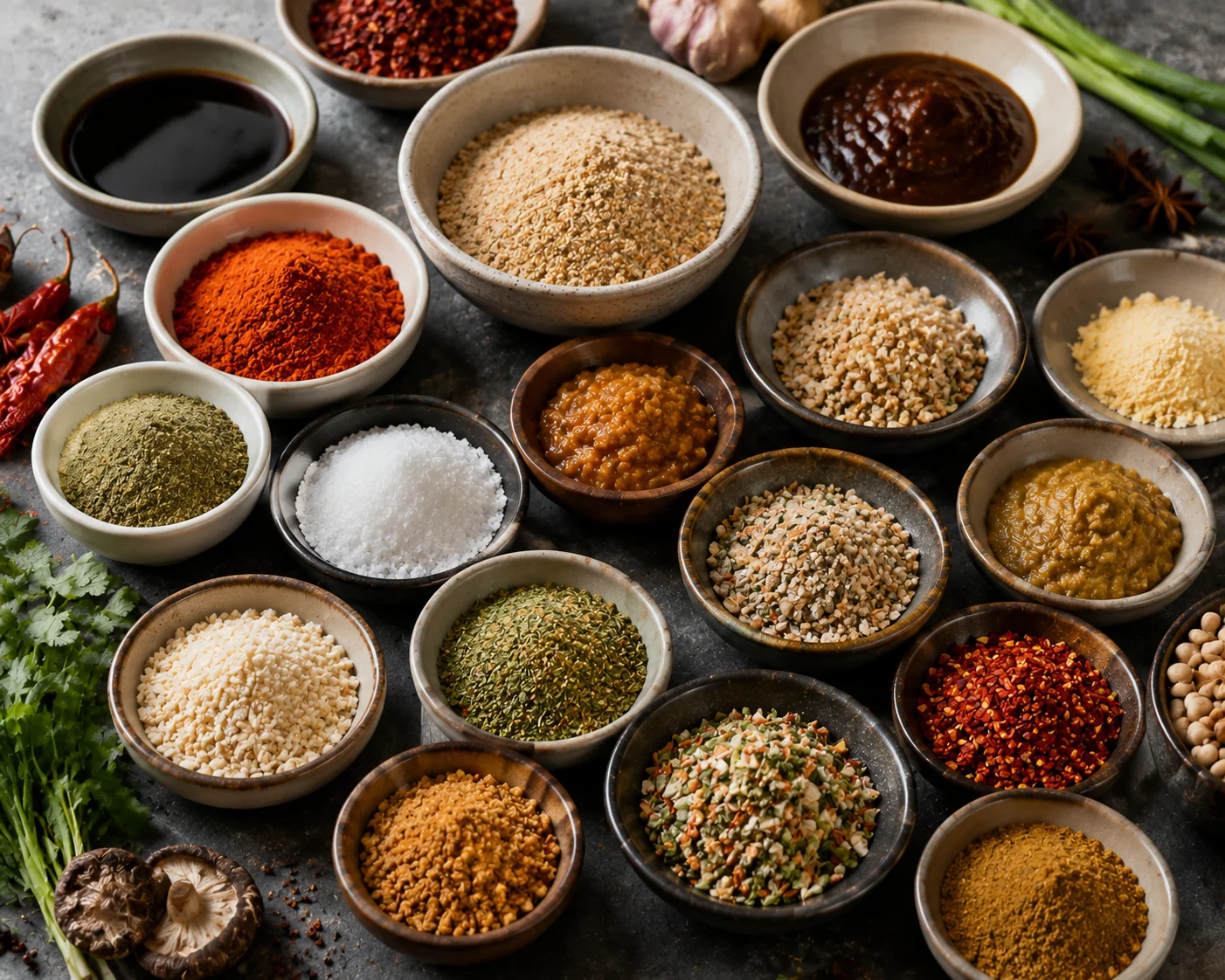
Seasoning plays an important role in modern food manufacturing by improving taste, aroma, mouthfeel and overall product experience.
For food manufacturers, understanding different types of seasoning helps create better products for different applications, markets and consumer preferences.
Seasonings can be classified in different ways, including by flavor profile, application, ingredients and production purpose. This guide introduces common seasoning types and explains how manufacturers choose suitable seasoning solutions.
What Are the Main Types of Seasoning?
Different food products require different seasoning systems. Some products need strong savory impact, while others require balanced aroma, mild taste or customized flavor performance.
The main types of seasoning commonly used in food manufacturing include:
- Compound seasonings
- Flavor bases
- Reaction flavors
- Application-specific seasonings
- Umami and savory seasonings
For industrial food production, seasonings are usually developed according to the final application rather than simply a single flavor ingredient.
1. Compound Seasonings
Compound seasonings combine multiple flavor components to create a balanced and consistent taste profile.
They are widely used in snacks, instant foods, sauces, meat products and prepared foods because they can provide complete flavor systems.
Common characteristics include:
- Balanced taste profile
- Consistent flavor performance
- Easy application in food production
- Adjustable formulation according to customer requirements
Food manufacturers looking for customized seasoning systems can explore our seasoning blends solutions for different food applications.
2. Flavor Bases
Flavor bases provide a foundation for developing specific food flavors.
They are commonly used when manufacturers need a stronger flavor foundation, such as meat, broth, savory or specialty flavor profiles.
A suitable flavor base can help improve:
- Flavor depth
- Overall mouthfeel
- Savory perception
- Product consistency
Different applications may require different flavor bases depending on the target product and market.
You can learn more about our flavor base solutions for food manufacturing applications.
3. Reaction Flavors
Reaction flavors are developed through controlled flavor reactions to create characteristic cooked, roasted or savory notes.
They are often used in applications where manufacturers need deeper and more complex flavor profiles.
Typical applications may include:
- Meat-flavored products
- Soups and broths
- Sauces
- Snack products
Reaction flavors can help reproduce specific sensory characteristics while maintaining consistency in industrial production.
4. Application-Specific Seasonings
Different food categories have different seasoning requirements.
Application-specific seasoning solutions are developed according to the final product, cooking method and target consumer preference.
Examples include:
- Instant noodle seasoning
- Hot pot seasoning
- Snack seasoning
- Sauce seasoning
- Soup base seasoning
Our application seasoning solutions are designed around specific food categories and manufacturing needs.
How Food Manufacturers Choose the Right Seasoning
Selecting the right seasoning depends on several factors.
1. Product Application
The seasoning requirements for snacks, sauces, instant foods and meat products can be completely different.
2. Target Market
Consumer preferences vary by region. Heat level, saltiness, aroma and flavor intensity may need adjustment for different markets.
3. Production Process
A seasoning system should perform well during mixing, heating, storage and final preparation.
4. Customization Requirements
Many food manufacturers require customized solutions rather than standard seasoning products.
Flavor profile, intensity, application method and formulation goals can all be adjusted according to customer needs.
Why Customized Seasoning Solutions Matter
In competitive food markets, unique flavor profiles can help brands create differentiated products.
Customized seasoning development allows manufacturers to achieve:
- Consistent product quality
- Specific flavor targets
- Regional market adaptation
- Improved consumer experience
Professional seasoning suppliers work with food manufacturers to develop solutions that match specific applications and production requirements.
Conclusion
There are many types of seasoning used in modern food manufacturing, including compound seasonings, flavor bases, reaction flavors and application-specific seasoning solutions.
The best seasoning choice depends on the final product, target market and desired flavor performance.
Zhongxinsheng Flavor Co., Ltd. provides customized seasoning and flavor solutions for food manufacturers, helping customers develop suitable flavor systems for different applications.
Contact our team to discuss your seasoning requirements and product development goals.