
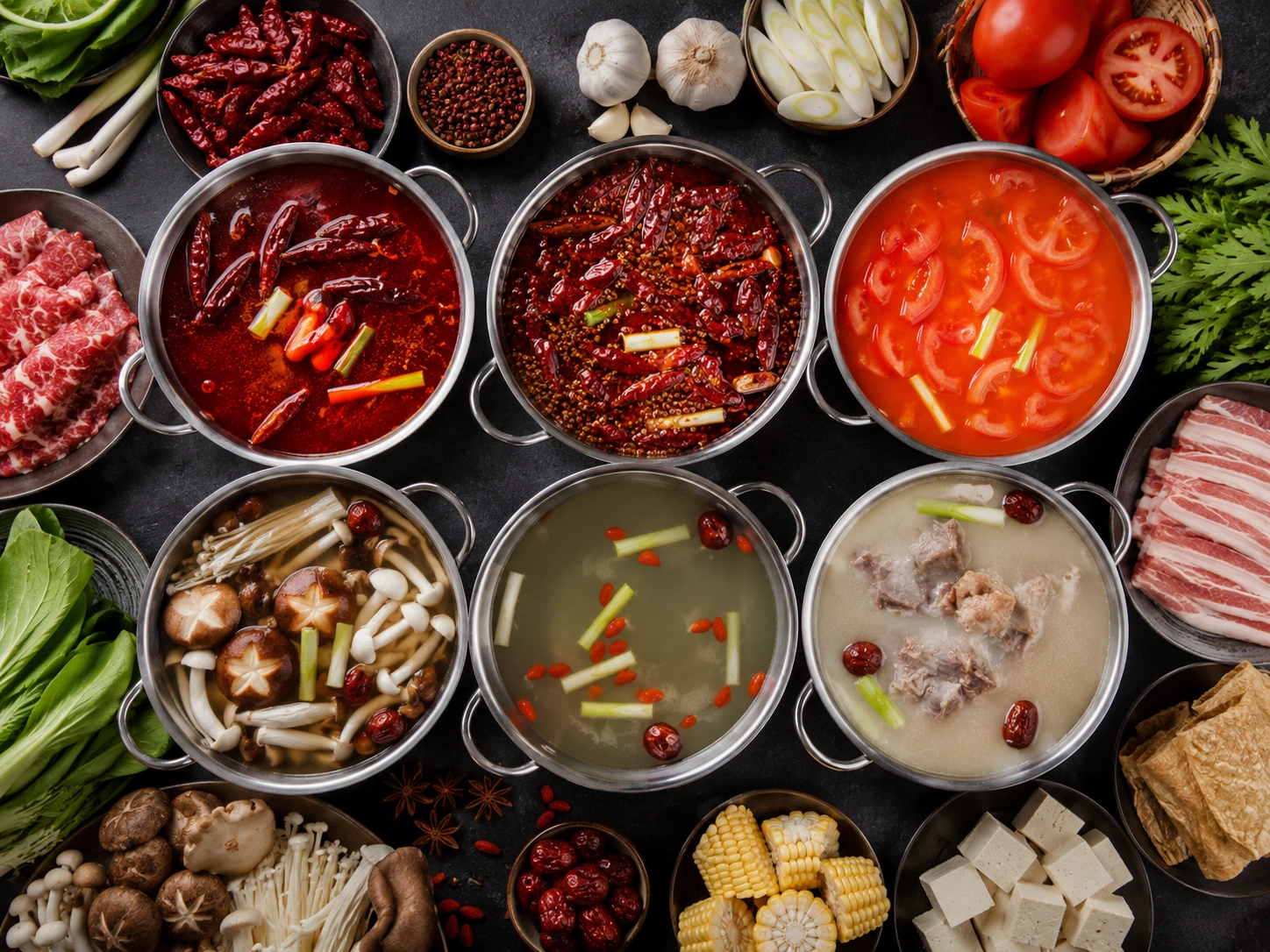
Hot pot has developed into a diverse food category with broth styles ranging from intensely spicy and savory to tomato-based, mushroom-based and mild clear broths.
For food manufacturers, restaurant chains and seasoning brands, understanding different hot pot broth types is important for flavor development, product positioning and formulation consistency.
Different markets may prefer very different levels of heat, saltiness, aroma, savory intensity and mouthfeel. For this reason, commercial hot pot products usually require formulation adjustments based on the target application and consumer preference.
1. Spicy Hot Pot Broth
Spicy hot pot broth is one of the most recognizable hot pot styles. It typically combines chili heat with savory depth, spice aroma and a rich broth profile.
Depending on the target market, the heat level may range from moderately spicy to extremely hot. A successful formulation needs more than chili intensity alone.
Important considerations can include:
- Chili heat level
- Savory intensity
- Spice aroma
- Salt balance
- Broth richness
- Oil compatibility
- Lingering flavor
For industrial food production, the balance between heat, aroma and savory flavor is particularly important. Excessive heat without enough flavor body can make the broth taste sharp rather than full and balanced.
2. Sichuan-Style Mala Broth
Mala broth is characterized by the combination of chili heat and a distinctive numbing sensation commonly associated with Sichuan-style hot pot.
The word “mala” reflects two important sensory characteristics: ma, referring to numbing sensation, and la, referring to chili heat.
However, commercial mala seasoning development involves more than increasing chili and pepper intensity. A balanced mala broth also requires savory body, aroma and background flavor.
Food manufacturers may need to adjust:
- Numbing intensity
- Chili heat
- Savory strength
- Spice complexity
- Salt level
- Oil-phase aroma
- Regional flavor preference
This is especially important when developing products for different international markets, because tolerance for both heat and numbing sensation can vary significantly.
3. Tomato Hot Pot Broth
Tomato hot pot broth provides a milder alternative to strongly spicy broth styles. Its flavor profile normally emphasizes tomato aroma, balanced acidity, mild sweetness and a savory background.
From a formulation perspective, acidity is one of the most important factors. Too much acidity can create a sharp taste, while excessive sweetness may weaken the savory character expected from a hot pot broth.
The seasoning system should support the tomato profile while maintaining sufficient broth depth and aftertaste.
4. Mushroom Hot Pot Broth
Mushroom hot pot broth usually focuses on a mild, rich and savory flavor profile.
Compared with spicy broth, the sensory emphasis is less about heat and more about aroma, umami perception, broth body and a clean aftertaste.
Typical formulation considerations include:
- Mushroom aroma
- Savory intensity
- Broth body
- Salt balance
- Aftertaste
- Compatibility with vegetables and meat ingredients
Mushroom broth can be particularly useful for brands developing hot pot products for consumers who prefer less spicy flavor profiles.
5. Clear and Light Hot Pot Broth
Clear hot pot broth is generally designed to provide a clean and relatively mild flavor.
Instead of dominating the foods cooked in the pot, the broth should support the natural flavor of meat, seafood, vegetables and other ingredients.
Common characteristics include:
- Clean savory flavor
- Moderate saltiness
- Light aroma
- Balanced mouthfeel
- Low bitterness
- Clean finish
One challenge for manufacturers is maintaining enough flavor impact while keeping the finished broth light and clean.
6. Meat-Flavored Hot Pot Broth
Meat-flavored hot pot broths may be developed around beef, chicken, pork or other savory profiles.
These products normally require stronger broth body and cooked-meat character than clear broth while remaining balanced enough to work with a variety of food ingredients.
Manufacturers may focus on:
- Meat flavor identity
- Savory depth
- Cooked aroma
- Broth richness
- Salt balance
- Long-lasting aftertaste
Flavor development can also be supported by different seasoning blends depending on the required finished-product profile.
7. Seafood Hot Pot Broth
Seafood-style hot pot broth normally requires a cleaner and more delicate profile than heavily spiced or meat-based broths.
The seasoning should complement seafood rather than masking its natural flavor.
Important formulation considerations can include:
- Clean savory character
- Controlled seafood aroma
- Moderate saltiness
- Light sweetness
- Low bitterness
- Fresh-tasting finish
8. Regional and Customized Hot Pot Broth Types
Hot pot flavor preferences vary significantly between countries and consumer groups.
A formulation developed for one market may need adjustment before being introduced into another region.
Manufacturers may need to modify:
- Chili intensity
- Numbing sensation
- Salt level
- Sweetness
- Savory strength
- Aroma profile
- Broth color
- Oil content
This is where customized application seasonings become important. Instead of relying on one universal formula, seasoning systems can be adjusted according to the final product, preparation method and target market.
How Food Manufacturers Choose the Right Hot Pot Broth
Choosing the right hot pot broth type should begin with the finished product and target consumer.
Target Consumer
Consumers accustomed to strong spicy foods may expect significant chili and spice intensity, while other markets may prefer tomato, mushroom or mild savory broths.
Final Application
The formulation requirements for a restaurant soup base can differ from those of an instant seasoning powder, concentrated seasoning system or prepared-food product.
Required Flavor Intensity
Some applications need an immediate and strong flavor impact, while others require a cleaner profile that develops gradually during cooking.
Customization Requirements
Saltiness, spicy intensity, aroma, savory strength and broth body can all be adjusted according to the customer’s product requirements.
Hot Pot Seasoning Development for Food Manufacturers
Commercial hot pot seasoning development involves more than choosing a broth flavor.
Manufacturers also need to consider how the seasoning performs during preparation, dilution and heating, as well as whether the finished broth remains consistent during production.
A hot pot seasoning solution may be adjusted according to:
- Spicy intensity
- Savory strength
- Aroma
- Saltiness
- Broth richness
- Target application
- Regional consumer preference
Food manufacturers looking for broader seasoning options can also explore our seasoning and flavor products for different food applications.
Conclusion
Common hot pot broth types include spicy, mala, tomato, mushroom, clear, meat-flavored and seafood-style broths.
Each style requires a different balance of aroma, saltiness, savory intensity, heat and mouthfeel.
For food manufacturers, the most suitable formulation depends on the final application, target market and desired flavor profile.
Zhongxinsheng Flavor Co., Ltd. develops seasoning and flavor solutions for food manufacturers, including customized seasonings for different food applications and market requirements.
If you are developing a hot pot seasoning product, contact our team to discuss your target flavor profile and application requirements.