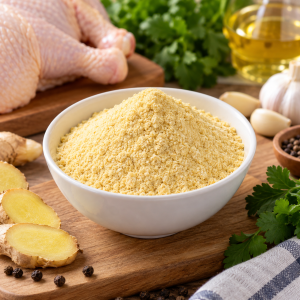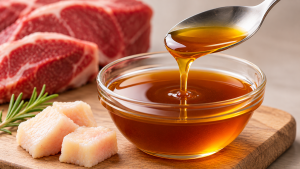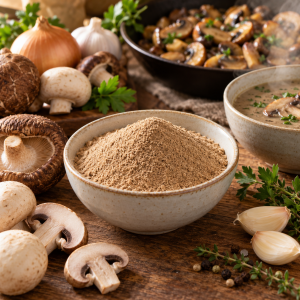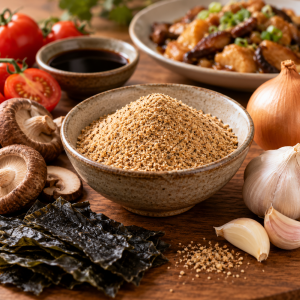
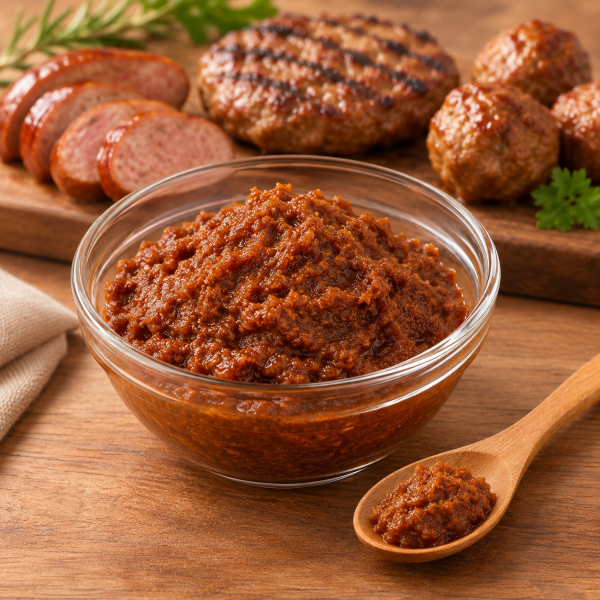
Cooked Meat Seasoning Base is a customizable savory seasoning base developed for manufacturers of sausage, burgers, meatballs, processed meat and ready meals that need a fuller meat taste, stronger cooked-meat character and better savory depth in the finished product.
Instead of focusing on one aroma ingredient, this product direction is designed around the complete food application. The seasoning base can be adjusted according to the meat type, target taste, existing seasoning system, processing conditions and the specific problem the manufacturer wants to improve.
Depending on the application, Cooked Meat Seasoning Base may be used as the savory foundation of a broader compound seasoning system and supported by spices, umami ingredients, reaction flavors or other flavor components when required.
Recommended dosage should be confirmed according to the application, formulation and target flavor profile.
What Problems Can Cooked Meat Seasoning Base Help Address?
Processed meat products do not always need a stronger aroma. In many cases, the real problem is that the finished product lacks body, meat taste or a convincing cooked-meat profile after processing.
Typical development needs may include:
- weak meat taste after cooking;
- insufficient cooked-meat character;
- a thin or incomplete savory profile;
- good aroma but weak flavor during eating;
- short aftertaste;
- insufficient umami or savory body;
- spices that overpower the meat profile;
- loss of flavor impact after freezing or reheating;
- or the need to simplify an existing seasoning system.
The first step should therefore be to identify what is missing in the finished food rather than simply increasing one flavor ingredient.
A Seasoning Base for Complete Meat Applications
Cooked Meat Seasoning Base is intended to function as part of a complete savory seasoning system.
A typical meat seasoning system may include several layers:
- meat taste to establish the main savory identity;
- savory body to create depth and fullness;
- umami to support overall taste intensity;
- spices such as pepper, garlic, onion or chili according to the application;
- cooked or roasted notes when a stronger thermal meat direction is required;
- top aroma when a more recognizable initial aroma is needed;
- salt and overall seasoning balance according to the finished food.
The exact combination should be selected according to the food application and target sensory profile.
Typical Applications
Cooked Meat Seasoning Base can be customized for applications such as:
- sausage;
- meatballs;
- burger patties;
- processed beef products;
- processed pork products;
- processed chicken products;
- meat fillings;
- frozen meat products;
- prepared meat dishes;
- ready meals;
- meat sauces;
- and other savory food applications requiring a fuller cooked-meat profile.
The product direction should not be copied unchanged from one application to another. Meat type, fat content, water level, spices, heating conditions and final preparation method can all influence the finished sensory result.
For Sausage Seasoning Systems
Sausage formulations often contain salt, spices, meat, fat, water and other savory ingredients, but the finished product may still lack sufficient meat body after cooking.
In this situation, Cooked Meat Seasoning Base can be evaluated as the underlying savory foundation of the seasoning system.
During development, manufacturers may evaluate:
- overall meat taste;
- cooked-meat character;
- savory depth;
- umami;
- salt balance;
- pepper and spice profile;
- aroma after cooking;
- and aftertaste.
If stronger roasted or thermal notes are required, a suitable technical component from our Reaction Flavors range may be evaluated as one part of the broader seasoning system.
For Burger Patties
A burger seasoning system may need to combine meat taste, fatty richness, cooked or grilled notes, salt, pepper and savory body.
Simply increasing beef aroma does not always create a fuller burger profile.
Cooked Meat Seasoning Base can be evaluated when the patty needs more underlying meat body and savory continuity, while other components can be adjusted separately if the target requires stronger grilled, roasted or browned characteristics.
The final sample should be tested after the actual cooking method used for the product.
For Meatballs
Meatballs often contain meat, fat, water, starch and seasoning components that can dilute or change meat flavor perception.
A formulation may already have sufficient salt and spices but still taste weak or incomplete after cooking.
Cooked Meat Seasoning Base can be customized to support a fuller meat profile while fitting the manufacturer’s existing seasoning and processing system.
Application testing should be carried out in the complete meatball formulation and under the actual cooking, frying, steaming, freezing or reheating conditions used commercially.
For Ready Meals and Prepared Foods
Ready meals can be especially challenging because meat is often combined with sauces, vegetables, starches, oils and other ingredients.
These components may reduce the perception of meat taste or change the balance of the seasoning system.
Possible applications include:
- beef rice meals;
- prepared chicken meals;
- meat pasta sauces;
- frozen meat meals;
- meat fillings;
- prepared meat dishes;
- and other ready-to-heat savory foods.
The seasoning base should therefore be evaluated in the complete finished meal, not only in the isolated meat component.
Cooked Meat Seasoning Base vs. Savory Flavor Base
Zhongxinsheng also provides a broader Savory Flavor Base for manufacturers that need general savory depth and flavor body across different food applications.
The two directions have different development priorities.
| Product Direction | Main Focus |
|---|---|
| Cooked Meat Seasoning Base | Meat applications, cooked-meat character, meat taste, savory body and processed meat systems |
| Savory Flavor Base | Broader savory foundation, depth and body across noodles, soups, sauces, snacks, meat products and prepared foods |
The correct choice depends on the finished food rather than the product name alone.
Cooked Meat Seasoning Base vs. Reaction Flavor
Cooked Meat Seasoning Base and Reaction Flavor should not be treated as interchangeable products.
The seasoning base is designed to build the underlying savory and meat foundation of the finished food.
A reaction flavor is a technical component that may be used when the formulation needs more specific roasted, grilled, browned or heat-generated meat characteristics.
| Component | Main Role |
|---|---|
| Cooked Meat Seasoning Base | Meat taste, savory body, cooked-meat foundation and overall depth |
| Reaction Flavor | Specific roasted, grilled, browned or thermal aroma characteristics |
| Compound Seasoning | Complete balance of meat taste, salt, spices, umami, aroma and other required components |
Reaction Flavor should therefore support the application solution when needed rather than define the entire seasoning system.
Umami Is Important, but It Is Not the Whole Meat Profile
Increasing umami can strengthen savory intensity, but it does not automatically create a complete meat taste.
A meat product may have sufficient umami and salt while still lacking cooked-meat character, body or aftertaste.
During formulation development, R&D teams should evaluate several dimensions separately:
- meat identity;
- savory depth;
- umami;
- cooked-meat character;
- aroma;
- spice balance;
- mouthfeel;
- and aftertaste.
This makes it easier to determine which component of the seasoning system actually needs adjustment.
Fat and Water Can Change Flavor Performance
Processed meat products can contain very different levels of meat, fat and water.
These differences can change how seasoning components are perceived.
For example, the same seasoning base may perform differently in:
- a lean chicken product;
- a higher-fat sausage;
- a burger patty;
- a starch-containing meatball;
- or a meat filling used inside a prepared food.
This is why the same product direction and use level should not automatically be applied to every formulation.
Processing Conditions Matter
The seasoning system should be evaluated under conditions that reflect actual production.
Depending on the application, these conditions may include:
- mixing;
- tumbling;
- marination;
- steaming;
- boiling;
- frying;
- grilling;
- roasting;
- freezing;
- storage;
- and reheating.
A sample that tastes suitable before processing may perform differently after cooking or reheating.
The finished food should therefore remain the main reference point during product development.
How to Evaluate Samples
When comparing different Cooked Meat Seasoning Base samples, manufacturers should use the same base formulation and production process whenever possible.
Useful evaluation criteria may include:
- meat taste;
- cooked-meat character;
- savory depth;
- umami;
- salt balance;
- spice compatibility;
- aroma after processing;
- body and mouthfeel;
- aftertaste;
- and overall similarity to the target product.
A Practical Development Process
- Define the food application. Confirm whether the product is sausage, burger, meatball, prepared food or another meat application.
- Define the target profile. Clarify the desired meat taste, cooked character, savory strength and spice direction.
- Identify the current problem. Determine whether the product lacks meat taste, body, aroma, umami, aftertaste or processing stability.
- Review the current seasoning system. Confirm what ingredients are already being used.
- Test the seasoning base in the actual food formulation.
- Run the real production and heat process.
- Evaluate the finished product.
- Adjust individual components according to specific feedback.
Complete Compound Seasoning or Separate Components?
Different manufacturers may prefer different levels of formulation control.
Some customers may want a more complete compound seasoning that simplifies weighing and formulation.
Other manufacturers may prefer to combine separate components such as:
- Cooked Meat Seasoning Base;
- salt;
- spices;
- umami ingredients;
- Reaction Flavor;
- other flavor components;
- and application-specific ingredients.
Neither approach is automatically better.
The appropriate solution depends on the manufacturer’s production process, R&D capability, sourcing strategy and target finished product.
Cost Optimization Should Start with the Complete Seasoning System
For commercial food production, cost should not be evaluated only by comparing the price per kilogram of one ingredient.
A more practical comparison should consider:
- actual use level after application testing;
- number of additional seasoning ingredients required;
- whether the target meat profile is achieved;
- processing performance;
- batch consistency;
- need for further flavor correction;
- and total seasoning cost in the finished food.
A better-balanced seasoning system may sometimes be more cost-effective than continuously increasing one aroma or flavor component.
Custom Cooked Meat Seasoning Development
Cooked Meat Seasoning Base can be customized according to the requirements of the finished food product.
Development can consider:
- food application;
- meat type;
- target meat taste;
- desired cooked or roasted character;
- savory strength;
- body and mouthfeel;
- aftertaste;
- current seasoning system;
- production and heat process;
- target market;
- benchmark product;
- and customer feedback from application tests.
Product form, specification and final sensory direction should be confirmed according to the actual project requirements.
What Information Should Customers Provide?
To select or develop a more suitable seasoning direction, customers can provide:
- What product are you making?
- What meat type are you using?
- What flavor profile do you want?
- What problem do you want to improve?
- What seasoning or formula are you currently using?
- What product form do you prefer?
- What is the current or target dosage?
- What production and heat process is used?
- What is the target market?
- What is the expected trial quantity or monthly usage?
This application information helps determine whether the project needs a complete compound seasoning, a seasoning base or selected technical components.
Who Is This Product Suitable For?
Cooked Meat Seasoning Base can be developed for:
- sausage manufacturers;
- meatball manufacturers;
- burger manufacturers;
- processed meat factories;
- prepared food manufacturers;
- frozen food manufacturers;
- ready meal manufacturers;
- seasoning manufacturers;
- food ingredient distributors;
- importers;
- and food R&D teams developing savory meat products.
Discuss Your Cooked Meat Seasoning Project
Zhongxinsheng Flavor Co., Ltd. provides compound seasoning, savory seasoning bases, application seasoning solutions and supporting food ingredients for food manufacturers.
If you are developing sausage, meatballs, burger patties, processed meat or ready meals, the seasoning system can be discussed according to your finished application, target taste, existing formula, production process and cost requirements.
Manufacturers can also review our Application Seasonings, Savory Flavor Base and Reaction Flavors when building the appropriate savory seasoning system.
Contact Zhongxinsheng Flavor and share your food application, target meat profile, current seasoning system and processing conditions to discuss suitable sample directions.