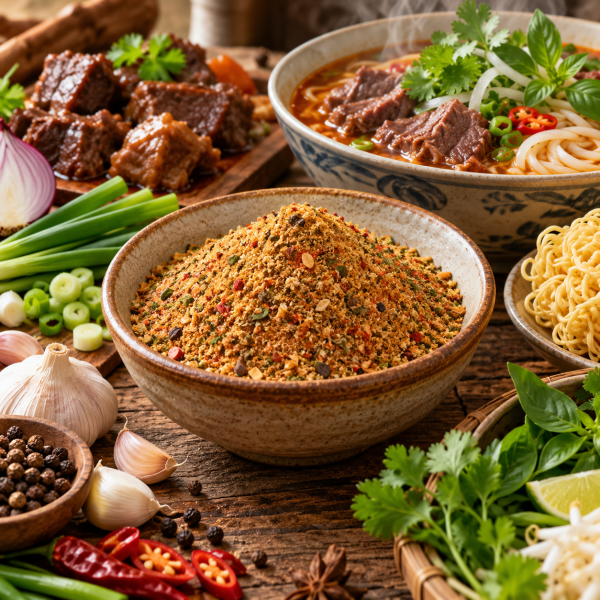
Vietnamese Stewed Beef Noodle Seasoning is an application-specific seasoning solution developed for instant noodle manufacturers creating rich stewed beef broth profiles with beef body, cooked meat character, broth depth, umami, warm aromatics and a long savory aftertaste.
The target is not simply a strong beef flavor. A convincing stewed beef noodle profile should create the sensory impression of beef that has been cooked slowly in a savory broth, with balanced meat, soup, aromatic and spice layers.
What Is Vietnamese Stewed Beef Noodle Seasoning?
Vietnamese Stewed Beef Noodle Seasoning is designed to support instant noodle applications that require a fuller and more culinary beef broth direction.
A complete flavor structure may include:
- stewed beef body;
- beef broth depth;
- cooked meat character;
- braised or stewed notes;
- onion and garlic aromatics;
- warm spice direction;
- umami and savory depth;
- controlled saltiness;
- slight sweetness;
- fat perception;
- and a lingering savory aftertaste.
The objective is to create a balanced noodle broth profile rather than a simple generic beef taste.
Designed for Stewed Beef Instant Noodle Applications
Stewed beef flavor development is different from general beef seasoning.
A basic beef noodle profile may focus mainly on beef aroma, saltiness and umami.
A stewed beef direction usually requires additional sensory layers such as broth richness, cooked meat notes, braised character, aromatic vegetables, warm spices, mouthfeel and a longer aftertaste.
These layers need to work together in the finished noodle soup.
Key Flavor Structure
Stewed Beef Body
The beef body provides the main meat identity of the seasoning.
It should remain noticeable after dilution with hot water and interaction with the noodle base.
A Beef Flavor Base can support beef body, savory fullness and broth-like depth when a stronger foundation is required.
Beef Broth Depth
Broth depth helps distinguish stewed beef noodles from simple beef-flavored noodles.
The broth should create fullness, umami persistence and a sense of longer cooking.
A weak broth foundation can make the meat flavor feel isolated from the rest of the soup.
Cooked Meat Character
Cooked meat notes help create the impression of prepared beef rather than only a generic beef aroma.
A Beef Reaction Flavor can support cooked and roasted beef character when additional meat impact is needed.
The roasted direction should be controlled carefully so that the final profile remains stewed and broth-led rather than becoming barbecue or grilled beef.
Braised and Stewed Notes
The stewed character comes from the relationship between beef, broth, aromatics, spices, slight sweetness and savory persistence.
The goal is to suggest slow cooking and deeper flavor development rather than simply increasing beef intensity.
Onion and Garlic Aromatics
Onion and garlic-type aromatics help connect the meat foundation with the broth and spice layers.
They can make the finished profile feel more culinary and integrated.
The aromatic layer should support the broth without becoming dominant.
Warm Spice Direction
Warm spices can add complexity and support the impression of a stewed beef dish.
The spice intensity should be adjusted carefully according to the target market and benchmark.
If the spice direction becomes too strong, the product may move toward curry, hot pot or strongly spiced beef rather than a classic stewed beef noodle profile.
Umami and Savory Depth
Umami helps build fullness and a longer savory sensation in the broth.
The goal is not simply to increase saltiness, but to create a more complete and persistent savory profile.
Slight Sweetness
A controlled level of sweetness can help round the beef, broth and spice layers.
It can also soften sharp saltiness and support the perception of a longer-cooked broth.
The sweetness should normally remain secondary.
Fat Perception and Mouthfeel
Fat perception contributes to the sense of richness in beef broth.
A product may have strong aroma but still feel thin if the mouthfeel is weak.
Application testing should therefore evaluate whether the broth feels rich, smooth and balanced rather than heavy or greasy.
Long Savory Aftertaste
The aftertaste should maintain beef, broth and umami character throughout the eating experience.
A balanced finish should remain savory without becoming excessively salty, bitter, heavy or tiring.
Vietnamese Stewed Beef Noodle Seasoning vs. General Noodle Seasoning
Our Noodle Seasoning is a broader seasoning solution for different instant noodle flavor concepts.
Vietnamese Stewed Beef Noodle Seasoning is more application-specific and focuses particularly on:
- stewed beef body;
- deep beef broth character;
- cooked meat notes;
- braised or stewed sensory direction;
- warm aromatics;
- umami persistence;
- fat perception;
- and a long savory finish.
This makes it suitable for manufacturers that already have a clear stewed beef noodle concept.
Suitable Applications
Vietnamese Stewed Beef Noodle Seasoning can be developed for applications such as:
- instant noodle soup seasoning;
- beef noodle seasoning powder;
- broth seasoning systems;
- cup noodles;
- packet noodles;
- beef soup bases;
- and other savory noodle applications requiring a stewed beef direction.
Custom Flavor Direction
Different brands may require different interpretations of stewed beef flavor.
The seasoning can be developed toward directions such as:
- stronger beef body;
- deeper broth character;
- more noticeable cooked meat notes;
- stronger stewed or braised character;
- lighter roasted notes;
- different warm spice intensity;
- deeper umami;
- lower perceived saltiness;
- richer mouthfeel;
- or a cleaner aftertaste.
The target should be defined according to the benchmark product, noodle format, target market and desired sensory profile.
Application Testing
The same seasoning can perform differently depending on the noodle system.
Application testing should consider factors such as:
- water volume;
- noodle type;
- seasoning dosage;
- oil sachet composition;
- serving temperature;
- preparation time;
- and total salt level.
These factors can influence perceived beef intensity, broth depth, spice aroma, mouthfeel and aftertaste.
Benchmark-Based Development
If a manufacturer has a target market product, the sensory profile can be separated into individual development dimensions.
Useful benchmarking points may include:
- beef intensity;
- broth depth;
- cooked meat character;
- stewed character;
- onion and garlic aroma;
- warm spice intensity;
- umami;
- saltiness;
- sweetness;
- fat perception;
- and aftertaste.
This approach helps identify exactly where a prototype differs from the target and makes sensory optimization more systematic.
What Information Helps With Development?
When requesting a customized Vietnamese Stewed Beef Noodle Seasoning, useful information may include:
- target benchmark product;
- target market;
- noodle format;
- desired beef intensity;
- desired broth depth;
- preferred cooked meat character;
- preferred stewed or braised direction;
- target spice intensity;
- target saltiness;
- desired umami level;
- desired mouthfeel;
- and feedback from current prototypes.
A clear sensory brief can make prototype development and adjustment more efficient.
Develop Your Stewed Beef Instant Noodle Flavor
If you are developing instant noodles and require a rich stewed beef broth direction, we can discuss the project based on your noodle system, market benchmark and target sensory profile.
Contact us to discuss Vietnamese Stewed Beef Noodle Seasoning and customized savory flavor development for your application.