
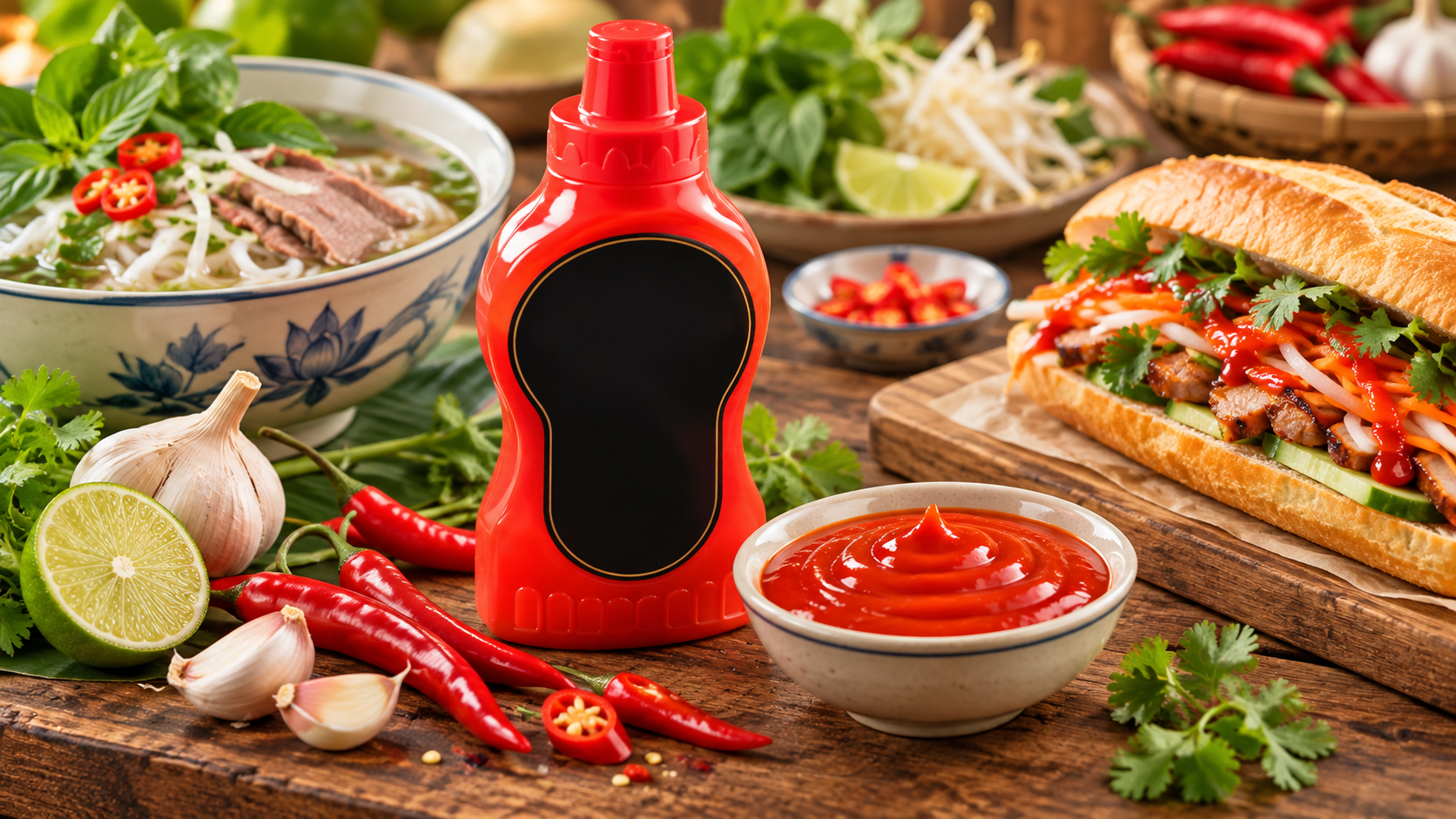
Quick Answer: To develop a chili sauce inspired by the sensory direction of CHIN-SU, food manufacturers should not focus only on increasing chili heat. A recognizable Vietnamese-style chili sauce profile depends on the interaction between chili aroma, heat intensity, sweetness, saltiness, tanginess, savory depth, sauce body and aftertaste. The most practical development method is to benchmark the finished sauce, separate the profile into sensory dimensions, build prototypes, and test them in the actual food applications where the sauce will be consumed.
Important note: CHIN-SU is a brand of Masan Consumer. This article is an independent sensory benchmarking and product development discussion. We do not claim access to CHIN-SU’s proprietary formula, ingredient ratios or manufacturing process.
Why Is CHIN-SU Chili Sauce a Useful Benchmark?
CHIN-SU Chili Sauce is a useful reference for food manufacturers because it demonstrates that a successful chili sauce is not defined by heat alone.
From a sensory development perspective, a complete chili sauce profile may involve several layers working together:
- chili aroma;
- initial heat;
- lingering heat;
- sweetness;
- saltiness;
- tanginess;
- savory and umami depth;
- sauce body and mouthfeel;
- and the final aftertaste.
If one of these elements becomes too dominant, the sauce may lose balance even if the chili intensity itself is strong.
Step 1: Benchmark the Finished Sauce, Not Only the Chili Ingredient
A common mistake in chili sauce development is to begin with the question:
“Which chili ingredient will make the sauce taste similar?”
That question is too narrow.
Consumers experience the finished sauce as one complete sensory system. Therefore, benchmarking should focus on the finished product rather than one individual ingredient.
A practical sensory evaluation can include:
- aroma immediately after opening the bottle;
- first impression on the tongue;
- speed of heat development;
- maximum perceived heat;
- sweetness;
- salt balance;
- acid perception;
- savory depth;
- mouthfeel;
- and aftertaste after swallowing.
Step 2: Separate Chili Aroma from Chili Heat
Chili aroma and chili heat are related, but they are not the same sensory dimension.
A sauce can have strong heat but weak chili aroma. Another sauce can have a very noticeable chili aroma but only moderate heat.
For product development, these two characteristics should be evaluated separately.
The development team should ask:
- Does the chili aroma appear before the heat?
- Is the heat immediate or gradual?
- Does the heat remain after swallowing?
- Does the heat cover sweetness or savory notes?
- Does the chili profile feel fresh, cooked, rounded or aggressive?
This makes it easier to adjust the flavor direction without simply making the sauce hotter.
Step 3: Build the Sweet-Salty-Tangy Balance
One of the most important characteristics of many Vietnamese-style chili sauces is that heat is supported by other taste dimensions.
Sweetness can round the chili impact.
Saltiness strengthens overall taste intensity.
Tanginess can make the sauce feel brighter and more appetizing.
However, these elements must support each other.
If sweetness becomes too strong, the sauce can feel heavy.
If acidity is too sharp, the sauce may feel thin or aggressive.
If salt is too dominant, the chili aroma becomes less noticeable.
The target is not maximum intensity in each dimension. The target is a recognizable and repeatable balance.
Step 4: Add Savory Depth Without Hiding the Chili
A chili sauce may appear simple from the outside, but savory depth can strongly affect how complete the sauce feels.
This layer can contribute:
- fullness;
- umami;
- roundness;
- and a longer savory finish.
Depending on the product concept, manufacturers may use a seasoning system or savory flavor components to build this supporting layer.
A Sauce Seasoning can be developed around the target sauce application to help coordinate saltiness, umami, sweetness, spices and overall savory balance.
The purpose of this layer is not to make the sauce taste like a meat seasoning. It should provide enough depth to support chili, sweetness and acidity.
Step 5: Pay Attention to Sauce Body and Mouthfeel
Flavor perception is influenced not only by taste and aroma but also by physical texture.
A thin sauce can release flavor very differently from a thicker sauce.
During benchmarking, manufacturers should observe:
- how the sauce coats food;
- how quickly it spreads in the mouth;
- whether sweetness or heat appears first;
- and how long the flavor remains after swallowing.
This is why a sensory benchmark should evaluate the complete eating experience rather than only comparing flavor powders or individual ingredients.
Step 6: Evaluate the Aftertaste
Aftertaste is especially important in chili sauce.
Consumers may experience:
- lingering heat;
- remaining sweetness;
- savory notes;
- acid freshness;
- or an unwanted bitter or harsh sensation.
A successful profile should leave a recognizable finish without creating unpleasant heaviness or excessive harshness.
The aftertaste should therefore be evaluated as a separate sensory dimension during product development.
Step 7: Test the Sauce With Real Foods
A chili sauce should not be developed only by tasting it directly from a spoon.
The same sauce can perform differently when used with:
- fried foods;
- noodles;
- meat products;
- snacks;
- sandwiches;
- dumplings;
- or other prepared foods.
Fat, starch, salt and temperature can all change the way chili, sweetness and acidity are perceived.
For this reason, application testing should reflect the way consumers will actually use the sauce.
Step 8: Use A/B Sensory Benchmarking
A practical development project can compare three samples:
- Sample A: the selected market benchmark;
- Sample B: the manufacturer’s existing sauce;
- Sample C: the new prototype.
Each sample should be evaluated under the same conditions.
Instead of asking only “Which one tastes better?”, score individual attributes such as:
- chili aroma;
- initial heat;
- lingering heat;
- sweetness;
- saltiness;
- tanginess;
- savory depth;
- mouthfeel;
- and aftertaste.
This approach helps the development team understand exactly where the prototype differs from the benchmark.
Should a Manufacturer Copy CHIN-SU Exactly?
No.
The goal of benchmarking is not to claim an identical formula.
A successful market product can be used to understand consumer expectations and sensory structure, but the final product should be developed for the manufacturer’s own brand, target market and positioning.
For example, a new product could be developed with:
- stronger chili aroma;
- less sweetness;
- higher heat;
- more tanginess;
- deeper savory character;
- cleaner aftertaste;
- or a different application focus.
The benchmark provides direction. It should not limit innovation.
What Information Should You Send to a Seasoning Supplier?
For a customized chili sauce development project, useful information may include:
- target benchmark product;
- target country or market;
- preferred heat level;
- desired sweetness;
- desired acidity;
- target savory intensity;
- finished sauce application;
- target consumer group;
- and feedback from current prototypes.
The more clearly the target is defined, the easier it becomes to create and optimize prototypes.
How Can a Seasoning System Support Chili Sauce Development?
Commercial chili sauce development usually requires more than a single flavor ingredient.
Depending on the target profile, the development process may involve:
- chili flavor direction;
- sweet-salty-acid balance;
- savory seasoning structure;
- spice and aromatic adjustment;
- application testing;
- sensory benchmarking;
- and prototype optimization.
A customized Sauce Seasoning can be developed around a specific sauce concept and sensory target.
If you are developing a chili sauce, dipping sauce or other savory sauce product and already have a market benchmark, you can contact us with your application information and target flavor direction.
Frequently Asked Questions
Can a seasoning supplier reproduce CHIN-SU Chili Sauce exactly?
A market product can be used as a sensory benchmark, but an exact proprietary formula cannot be determined simply from the finished product. Development should focus on achieving the required sensory direction rather than claiming an identical formula.
Is chili heat the most important factor in chili sauce?
No. Heat is important, but sweetness, saltiness, tanginess, chili aroma, savory depth, mouthfeel and aftertaste also strongly affect the finished experience.
Why should chili sauce be tested with real foods?
Because fat, starch, salt and serving temperature can change the perception of heat, sweetness, acidity and aroma. The final sauce should be evaluated under realistic use conditions.
Can Sauce Seasoning replace the whole chili sauce formula?
No. Sauce Seasoning is one part of the overall flavor and seasoning system. The finished sauce also depends on the sauce base, chili system, acidity, sweetness, texture and other application-specific components.