
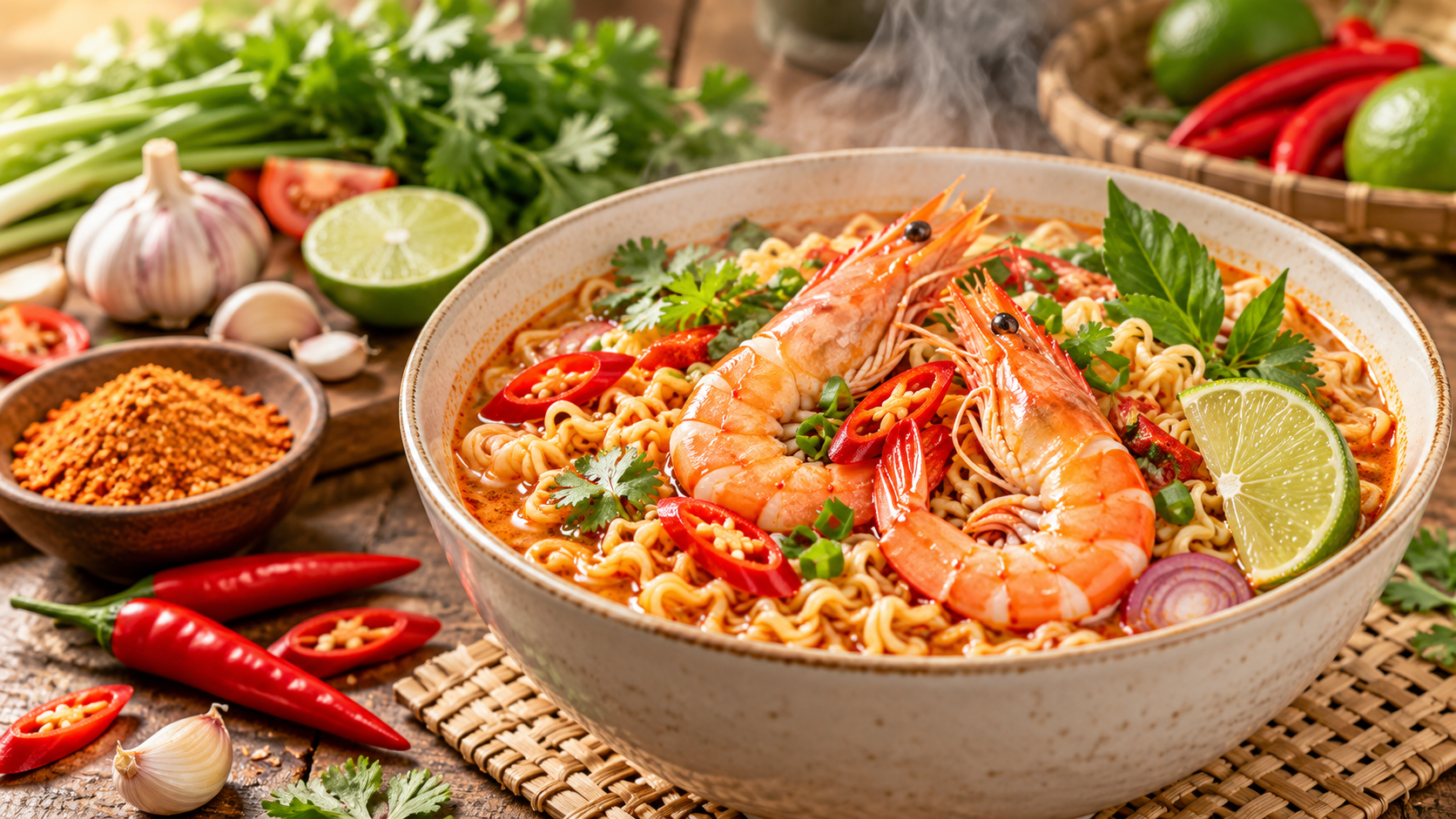
Quick Answer: To develop an instant noodle flavor inspired by Hảo Hảo Tôm Chua Cay, food manufacturers should not focus on copying a single “shrimp flavor.” The recognizable profile comes from the balance between sourness, chili heat, shrimp and seafood character, saltiness, sweetness, umami, garlic-onion aromatics, and the final aftertaste. A practical development system may combine a seafood flavor base, noodle seasoning, seafood seasoning blend, aromatic components, and application testing on the finished noodle product.
Important note: Hảo Hảo is a brand of Acecook Vietnam. This article is an independent sensory benchmarking and product development discussion. We do not claim access to Hảo Hảo’s proprietary formula or manufacturing process.
Why Is Hảo Hảo Tôm Chua Cay a Useful Flavor Benchmark?
Hảo Hảo Tôm Chua Cay is one of the most recognizable instant noodle flavor directions in Vietnam. Its value as a benchmark is not simply the presence of shrimp or chili. The important lesson for food developers is the overall sensory balance.
A successful sour-spicy shrimp noodle profile normally needs several flavor layers to work together:
- bright but controlled sourness;
- clear chili heat without excessive bitterness;
- recognizable shrimp and seafood character;
- salt and umami for savory impact;
- a small amount of sweetness to round the profile;
- garlic, onion and spice aromatics;
- and a clean, memorable savory aftertaste.
If one of these layers becomes too dominant, the final product can quickly feel unbalanced.
Step 1: Benchmark the Finished Noodle, Not Only the Seasoning Powder
When developing a similar flavor direction, the first mistake is often to compare dry seasoning powders directly.
Consumers do not eat the powder by itself. They experience the complete product after the seasoning has interacted with hot water, noodles, oil and other ingredients.
For that reason, benchmarking should be conducted on the finished application.
A useful sensory comparison can evaluate:
- aroma immediately after adding hot water;
- first impression of sourness and chili;
- shrimp and seafood identity;
- salt and umami intensity;
- sweetness and flavor roundness;
- garlic, onion and spice notes;
- broth body;
- and the aftertaste several seconds after swallowing.
Step 2: Build the Sourness as a Flavor Structure
Sour-spicy instant noodles need noticeable acidity, but simply increasing one acid ingredient does not automatically produce a better result.
If the acidity is too sharp, the broth may taste thin or aggressive. If it is too weak, the characteristic sour-spicy identity disappears.
During product development, manufacturers should evaluate:
- how quickly the sourness appears;
- whether it feels fresh or harsh;
- how it interacts with chili heat;
- and whether enough savory body remains after the sour note appears.
The goal is not maximum sourness. The goal is a recognizable sour profile that supports the shrimp and savory system.
Step 3: Control the Chili Heat
Spiciness is another major part of the profile, but “more spicy” does not necessarily mean “more similar.”
Food developers should distinguish between:
- immediate front-end heat;
- mid-palate chili intensity;
- lingering heat;
- and chili aroma.
For a balanced Vietnamese-style sour-spicy noodle, the chili should strengthen the overall flavor without completely covering the seafood character.
Step 4: Create a Clear Shrimp and Seafood Foundation
The seafood layer is where many development projects become too simple.
Using only a strong shrimp aroma can create an artificial or overly fishy profile. A more complete approach is to build a broader seafood foundation first and then adjust the shrimp direction on top of it.
A Seafood Flavor Base can help provide body and seafood depth, while the final shrimp identity can be adjusted according to the required product direction.
The target should be recognizable seafood character without unpleasant fishiness or excessive top-note intensity.
Step 5: Build the Savory Seasoning Backbone
Acidity, chili and shrimp attract attention, but the savory seasoning system determines whether the product feels complete.
This layer may include the balance of:
- saltiness;
- umami;
- sweetness;
- garlic and onion;
- pepper and other spices;
- and overall broth body.
A Seafood Seasoning Blend can be used as part of this structure, depending on the target application.
For instant noodle manufacturers, a broader Noodle Seasoning system can also help control the overall salt, umami, spice and flavor balance.
Step 6: Do Not Ignore Garlic, Onion and Aromatic Notes
Consumers often describe an instant noodle simply as “sour, spicy and shrimp,” but aromatic notes can strongly influence recognition.
Garlic, onion, chili aroma and other spice notes help connect the seafood base with the seasoning system.
This is why two products with similar salt, acid and chili levels can still taste very different.
The aromatic layer should be evaluated separately during sensory testing instead of being treated as a minor detail.
Step 7: Test the Flavor in the Real Instant Noodle Application
A seasoning that tastes good in a laboratory cup may perform differently in commercial instant noodles.
The final result can be affected by:
- noodle composition;
- oil content;
- water volume;
- preparation conditions;
- seasoning distribution;
- and how quickly aroma is released after hot water is added.
This is why application trials are essential.
The flavor should be evaluated under the same preparation conditions that the consumer will use.
Step 8: Use A/B Sensory Benchmarking
A practical development project can use three samples:
- Sample A: the selected market benchmark;
- Sample B: the manufacturer’s current product;
- Sample C: the new prototype.
Compare them under the same preparation conditions.
Instead of asking only “Which one tastes better?”, evaluate individual dimensions such as sourness, heat, seafood character, umami, aroma, broth body and aftertaste.
This makes formulation adjustment much more precise.
Should Manufacturers Copy Hảo Hảo Exactly?
No. Benchmarking does not mean copying a proprietary formula.
The more useful objective is to understand why consumers recognize and enjoy a successful market product, then develop a new flavor system suitable for your own brand, noodle base, target market and price positioning.
A manufacturer may decide to make the profile:
- more seafood-forward;
- more sour;
- less spicy;
- more premium;
- cleaner in aftertaste;
- or more suitable for another regional market.
The benchmark is the starting point, not the final formula.
What Information Should You Send to a Seasoning Supplier?
To develop a sour-spicy shrimp instant noodle flavor efficiently, manufacturers should provide as much application information as possible, including:
- target benchmark product;
- noodle type;
- target market;
- preferred sourness and heat level;
- desired shrimp and seafood intensity;
- target sensory positioning;
- current seasoning sample if available;
- and feedback from previous application trials.
With this information, a seasoning and flavor supplier can develop prototypes around a much clearer sensory target.
How Can We Support Sour-Spicy Shrimp Noodle Development?
For food manufacturers developing a Hảo Hảo-style sour-spicy shrimp flavor direction, the project can be approached as a complete flavor system rather than a single ingredient.
Depending on the application, development may involve:
- Seafood Flavor Base for seafood body and depth;
- Seafood Seasoning Blend for savory seafood seasoning structure;
- Noodle Seasoning for overall taste balance;
- aromatic adjustment for chili, garlic, onion and seafood notes;
- application trials;
- sensory comparison;
- and prototype optimization.
If you are developing an instant noodle product and have a market benchmark in mind, you can contact us with the product information and target flavor direction. We can discuss the seasoning and flavor development approach based on your actual application.
Frequently Asked Questions
Can a seasoning supplier exactly reproduce Hảo Hảo Tôm Chua Cay?
A supplier can use the product as a sensory benchmark and develop a similar flavor direction, but an exact proprietary formula cannot be known simply from the finished product. Commercial development should focus on matching the desired sensory profile rather than claiming an identical formula.
What is the most important part of a sour-spicy shrimp noodle flavor?
The key is balance. Sourness, chili heat, seafood character, saltiness, sweetness, umami and aromatics need to support one another rather than compete.
Is a seafood flavor base enough to make the complete seasoning?
Usually not. A flavor base mainly contributes seafood character and depth, while the complete noodle profile also requires seasoning balance, acidity, chili, aromatics and application-specific adjustment.
Why is application testing important?
Because the finished flavor changes after seasoning interacts with noodles, hot water, oil and preparation conditions. The final product should therefore be evaluated in the real application, not only as dry powder.