
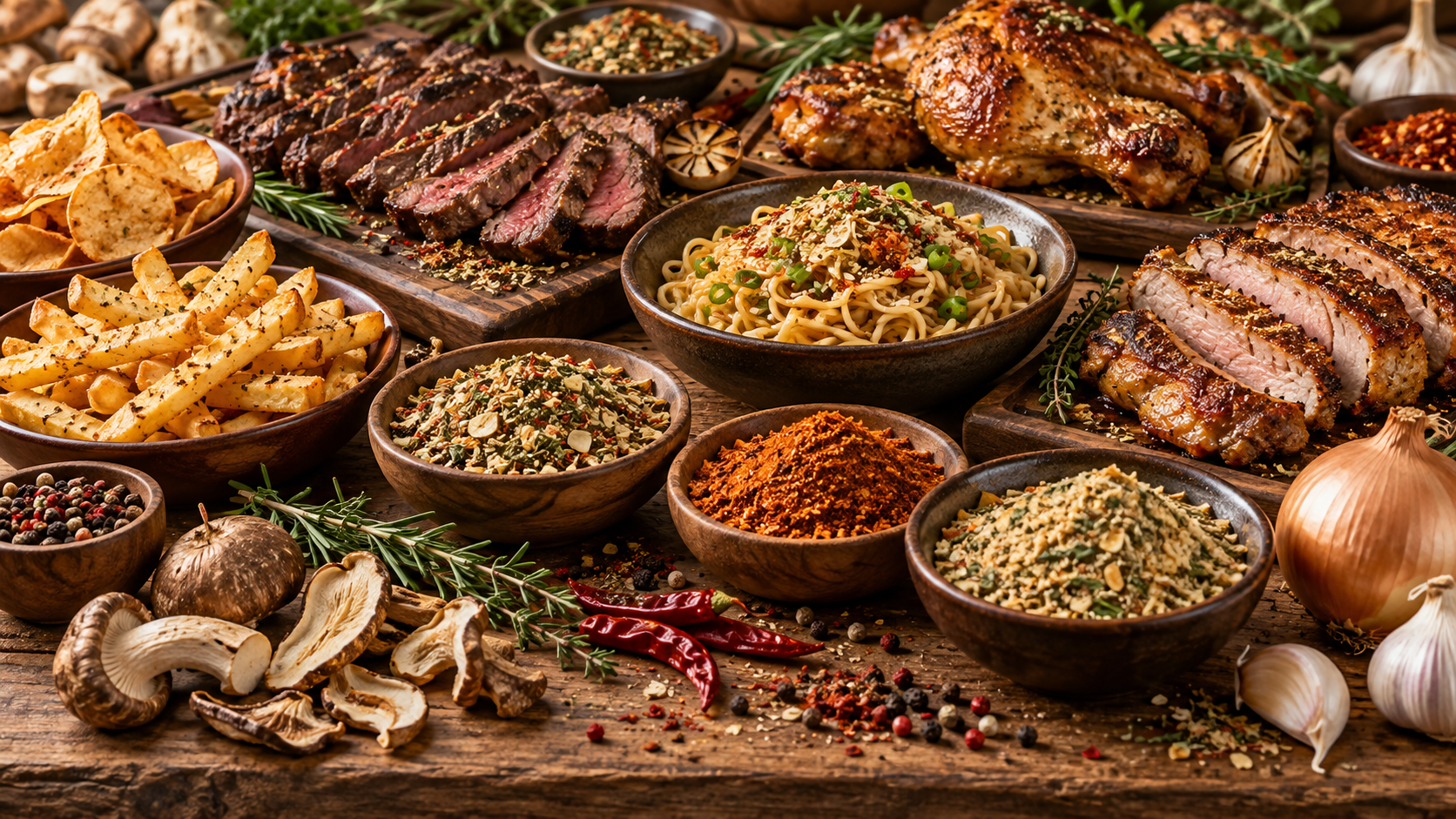
Quick Answer: Choosing a savory flavor supplier in China is not only about finding a company that sells flavor products. Food manufacturers should evaluate application experience, custom development capability, sample testing process, production consistency and long-term technical support. A reliable savory flavor supplier should understand the final food application and help develop the right flavor system, including Seasoning Blends, Flavor Bases and Reaction Flavors.
Savory flavors are widely used in instant noodles, soups, snacks, sauces, processed meat products, frozen foods, ready meals and many other food applications.
However, different food products require different flavor solutions.
A noodle manufacturer may need deeper broth character, a snack producer may require stronger roasted notes, and a meat product manufacturer may need more realistic cooked meat characteristics.
Therefore, selecting the right supplier is an important part of food product development.
What Is a Savory Flavor Supplier?
A Savory Flavor Supplier provides flavor solutions designed for food products that require rich, balanced and realistic savory taste characteristics.
These solutions may include:
- meat flavors;
- broth flavors;
- seasoning systems;
- reaction flavors;
- flavor bases;
- and customized savory flavor development.
A professional supplier focuses on the final application rather than simply offering a list of products.
Why Do Food Manufacturers Work with Savory Flavor Suppliers?
Developing a successful savory food product often requires more than adding flavor ingredients.
Manufacturers need to consider:
- target consumer taste expectations;
- processing conditions;
- heating performance;
- flavor release;
- aftertaste;
- and overall sensory balance.
A suitable flavor supplier can help identify the right flavor direction and improve product performance.
How to Evaluate a Savory Flavor Supplier in China?
1. Application Experience
The first factor to evaluate is whether the supplier understands your application.
Savory flavors may be used in:
- instant noodles;
- soups and broths;
- snacks;
- sauces;
- processed meat products;
- frozen foods;
- ready meals.
The same flavor profile may perform differently in different food systems.
2. Custom Flavor Development Ability
Many food manufacturers do not need a standard flavor product.
They may need adjustments based on:
- benchmark products;
- target market preferences;
- processing methods;
- existing formulation;
- and sensory expectations.
A supplier with development capability can provide more suitable solutions.
3. Sample Testing Process
Flavor evaluation should be performed in the actual application.
For example:
- noodle flavors should be tested in the final broth;
- snack flavors should be tested on the actual snack base;
- meat flavors should be evaluated after cooking;
- frozen food flavors should be tested after final preparation.
Application testing provides more meaningful results than evaluating flavor samples alone.
4. Production Consistency
For long-term cooperation, manufacturers should evaluate whether the supplier can maintain stable quality.
Important factors include:
- batch consistency;
- quality control;
- production management;
- communication efficiency;
- and repeat order support.
Three Main Types of Savory Flavor Solutions
1. Seasoning Blend
Seasoning Blend focuses on the overall seasoning profile.
It may help balance:
- saltiness;
- umami;
- spices;
- aroma;
- sweetness;
- and overall taste direction.
It is commonly used when a product requires a complete seasoning system.
2. Flavor Base
Flavor Base focuses on building the foundation of a savory profile.
It may support:
- flavor depth;
- broth body;
- umami;
- savory richness;
- and mouthfeel.
Flavor Bases are often considered when manufacturers need stronger foundation flavors.
3. Reaction Flavor
Reaction Flavor focuses on cooked, roasted and thermal flavor characteristics.
It may support:
- cooked meat notes;
- roasted aroma;
- grilled character;
- deeper savory perception;
- and realistic food flavor.
Savory Flavor Applications
Instant Noodles
Instant noodle products often require balanced flavor systems including:
- broth character;
- umami;
- seasoning balance;
- meat notes;
- and aftertaste.
Snacks
Snack applications may require:
- strong flavor impact;
- roasted notes;
- good coating performance;
- and flavor persistence.
Processed Meat Products
Meat products may require:
- cooked meat character;
- savory depth;
- realistic meat perception;
- and stable performance after heating.
Frozen Foods and Ready Meals
Frozen and prepared foods often experience multiple processing stages.
Flavor solutions should be evaluated after:
- freezing;
- storage;
- heating;
- and final preparation.
Examples of Savory Flavor Solutions
Different food products may require different flavor directions.
- Chicken Flavor Base for chicken savory foundation;
- Chicken Reaction Flavor for cooked chicken characteristics;
- Beef Flavor Base for beef flavor depth;
- Beef Reaction Flavor for roasted and cooked beef notes;
- Pork Reaction Flavor for cooked pork characteristics.
What Information Should You Provide When Contacting a Supplier?
To improve development efficiency, food manufacturers should provide:
- final application;
- target flavor profile;
- benchmark products;
- processing conditions;
- current flavor challenges;
- market requirements;
- and sensory expectations.
This information helps suppliers develop more suitable flavor solutions.
China Savory Flavor Supplier for Food Manufacturers
Zhongxinsheng Flavor Co., Ltd. develops savory flavor solutions including Seasoning Blends, Flavor Bases, Reaction Flavors and customized flavor systems for food manufacturers.
Our development approach focuses on application requirements, sensory targets and production conditions.
Explore our food seasoning and flavor products or contact us through WhatsApp to discuss your savory flavor development project.