
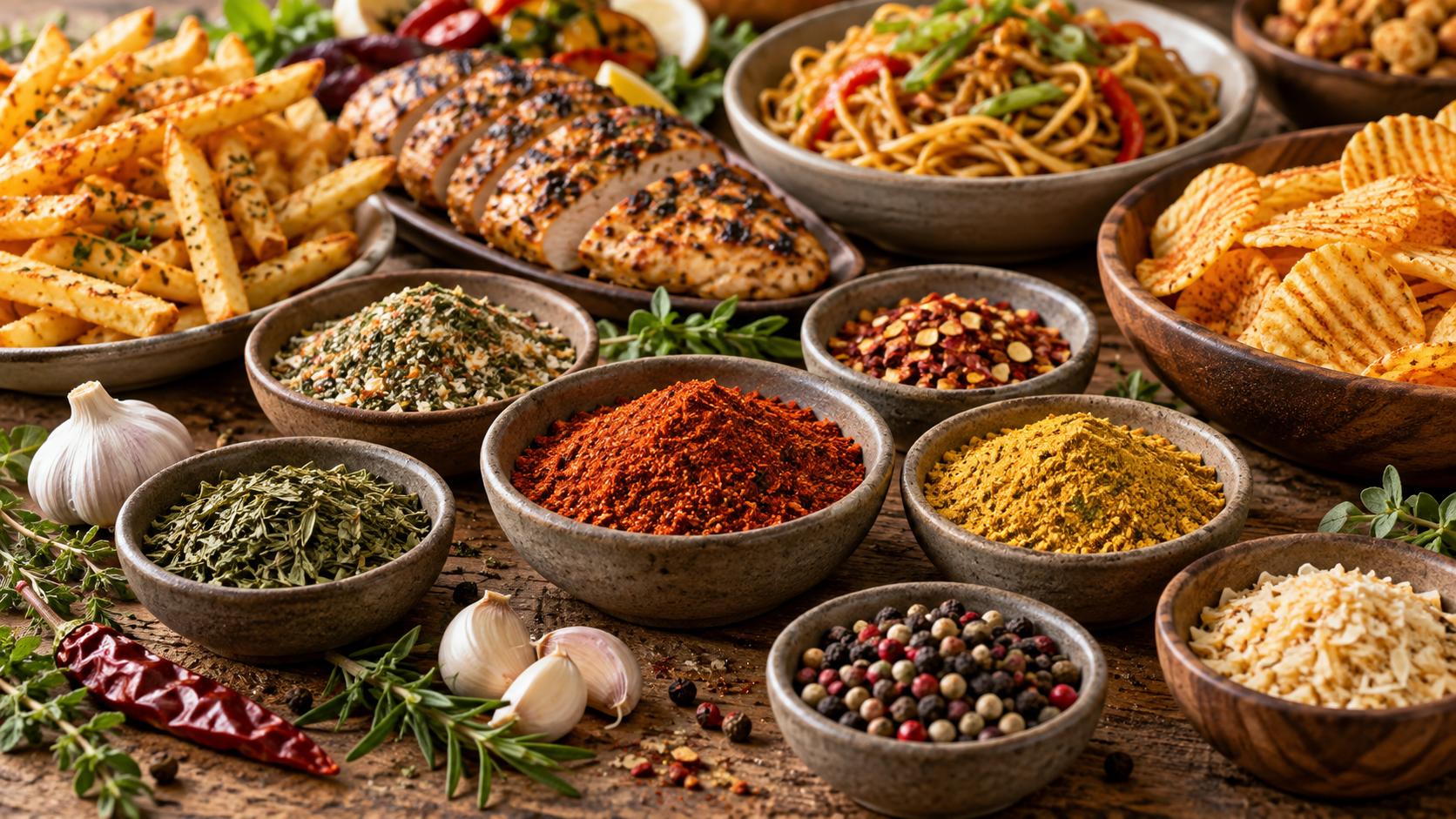
Quick Answer: To buy custom seasoning blends from China, food manufacturers should first define the finished food application, target flavor profile, processing conditions, benchmark product and market requirements. Then compare suppliers based on application understanding, customization capability, sample development, communication, production consistency and commercial support—not only quotation price. A reliable sourcing process normally moves from flavor brief to sample testing, adjustment, approval and then commercial purchasing.
Buying a standard seasoning from a catalog is relatively simple.
Buying a custom seasoning blend is different.
The buyer is not only purchasing an ingredient. The buyer is asking the supplier to develop a seasoning system that must work inside a specific food product, processing environment and target market.
For food manufacturers looking to buy custom seasoning blends from China, supplier selection should therefore focus on both the seasoning itself and the development process behind it.
This guide explains how B2B buyers can approach custom seasoning sourcing from China more effectively.
What Is a Custom Seasoning Blend?
A custom seasoning blend is a seasoning system developed or adjusted according to the requirements of a particular food product.
Depending on the application, the blend may need to balance different sensory elements such as:
- saltiness;
- umami;
- spices;
- sweetness;
- acidity;
- aroma;
- savory depth;
- heat level;
- aftertaste;
- and overall flavor balance.
The target is not simply to create a seasoning that tastes good by itself.
The seasoning needs to perform correctly in the buyer’s finished food application.
Why Do Food Manufacturers Buy Custom Seasoning Blends?
Standard seasoning products may be suitable for some applications, but food manufacturers often need more specific flavor performance.
A custom seasoning project may be considered when a company needs to:
- develop a new food product;
- match a target flavor direction;
- differentiate a product from competitors;
- adjust flavor for a specific market;
- improve an existing formulation;
- strengthen savory depth or aroma;
- change spice or heat intensity;
- or create a more consistent finished flavor profile.
Customization becomes especially important when the seasoning must work with a specific manufacturing process, ingredient system or preparation method.
Step 1: Define the Final Food Application
Before asking a Chinese supplier for samples or quotations, clearly explain what product you are manufacturing.
Typical applications may include:
- instant noodles;
- snacks;
- processed meat products;
- soups and broths;
- sauces;
- frozen foods;
- ready meals;
- QSR and foodservice products;
- seasoned coatings;
- or other savory food applications.
This information matters because one seasoning formula may perform differently in different food systems.
A seasoning developed for potato chips, for example, may require a different flavor balance from a seasoning used in soup, meat products or instant noodles.
Step 2: Prepare a Clear Flavor Brief
A useful flavor brief gives the supplier a clearer development target.
Instead of only saying:
“We need a chicken seasoning.”
the buyer can provide more specific information such as:
- light or rich flavor;
- roasted, cooked or broth-style character;
- mild or strong spice level;
- desired umami intensity;
- target aroma strength;
- preferred aftertaste;
- regional flavor direction;
- and any sensory characteristics that should be reduced or avoided.
The clearer the target, the easier it is for the supplier to select an existing sample or develop a customized direction.
Step 3: Explain the Current Flavor Problem
If the project is improving an existing product, tell the supplier what is currently wrong.
Useful examples include:
- the flavor is too weak after processing;
- the aroma is strong but the taste lacks depth;
- the seasoning is too salty;
- the umami is sharp but the mouthfeel is thin;
- the spice profile is not suitable for the target market;
- the aftertaste is too short;
- the flavor does not remain balanced after dilution;
- or the final product lacks a distinctive flavor identity.
This type of information is often more useful than simply asking the supplier to make the seasoning “stronger.”
Step 4: Clarify What Type of Flavor System You Need
One common sourcing mistake is treating every savory ingredient as if it performs the same function.
A project may require:
- a complete seasoning blend;
- a flavor base;
- a reaction flavor;
- an application seasoning;
- or a combination of different components.
A seasoning blend generally focuses on the overall taste profile and may include multiple taste and aroma components.
A flavor base may be used to strengthen the underlying savory foundation, such as broth body, meatiness, umami or flavor depth.
A reaction flavor may contribute cooked, roasted or thermal flavor characteristics depending on the target application.
Buyers can explore our Seasoning Blends range or read our guide on custom seasoning development from flavor brief to application testing.
Step 5: Provide a Benchmark or Reference Product
If possible, provide a benchmark product, reference sample or clear sensory description.
A benchmark can help communicate:
- target aroma direction;
- savory intensity;
- spice level;
- sweetness;
- saltiness;
- broth richness;
- aftertaste;
- and overall flavor style.
The objective does not always need to be an exact copy.
A benchmark can simply serve as a common sensory reference between the buyer and supplier.
Step 6: Share Processing Conditions
Seasoning performance can change during food manufacturing.
Before sample development, buyers should explain important processing conditions when relevant.
Useful information may include:
- mixing process;
- heating conditions;
- boiling or steaming;
- frying;
- baking;
- freezing;
- reheating;
- dilution;
- oil or fat content;
- and the way consumers prepare the final product.
A seasoning that tastes suitable in water or as a dry powder may perform differently after real production and preparation.
Step 7: Request Samples Before Commercial Purchasing
Sample evaluation is an important part of custom seasoning sourcing.
Rather than moving directly from a product name to a commercial order, buyers can first evaluate whether the sample works in the intended application.
During testing, manufacturers may evaluate:
- initial flavor impact;
- aroma;
- savory depth;
- salt balance;
- spice balance;
- umami;
- mouthfeel;
- aftertaste;
- performance after processing;
- and compatibility with the complete food formulation.
Whenever possible, samples should be tested in the actual finished product or a representative pilot formulation.
How Should Buyers Give Feedback on Samples?
Specific sensory feedback makes adjustment more efficient.
Instead of saying:
“The sample is not good.”
the buyer can provide feedback such as:
- the aroma direction is correct, but the savory depth is too weak;
- the spice level is suitable, but the saltiness is too high;
- the initial impact is good, but the aftertaste is too short;
- the sample performs well before heating but becomes weaker after processing;
- the flavor is close to the target, but the roasted character is too strong;
- or the overall profile needs more body and umami.
This gives the supplier a more practical basis for the next sample adjustment.
Step 8: Compare Chinese Seasoning Suppliers Beyond Price
Quotation price is one part of supplier selection, but it should not be the only factor.
Food manufacturers should also consider:
- Application understanding: Does the supplier understand how the seasoning will be used in the finished food?
- Customization capability: Can the supplier adjust the flavor according to the project requirements?
- Sample development: Can the supplier respond to feedback and provide revised samples?
- Communication: Can technical and commercial information be discussed clearly?
- Production consistency: Can the approved flavor direction be maintained when moving from samples to commercial supply?
- Documentation: Can the supplier discuss the documents required for the buyer’s target market?
- Commercial coordination: Can the supplier support the project after sample approval and during repeat purchasing?
A cheaper sample is not necessarily the better commercial choice if it creates problems in application, adjustment or future supply.
Step 9: Discuss Commercial Requirements Before Ordering
Once the flavor direction is close to approval, buyers should confirm the commercial requirements related to the project.
Depending on the product and destination market, topics may include:
- product specification;
- ingredient information;
- allergen information where applicable;
- quality documentation where required;
- packaging options;
- shelf-life information;
- order quantity;
- commercial quotation;
- shipping requirements;
- and market-specific documentation.
Exact requirements vary by product and market, so they should be confirmed directly for each project rather than assumed in advance.
When Should You Ask for a Price?
Buyers naturally need pricing information, but for customized projects the quotation is more meaningful after the supplier understands the actual requirement.
Important factors may include:
- product type;
- target flavor profile;
- required customization;
- expected purchasing volume;
- packaging requirements;
- and delivery destination.
Providing this information before requesting a final quotation helps reduce misunderstandings between buyer and supplier.
Step 10: Confirm the Approved Sample Before Commercial Production
Once a sample is approved, both sides should clearly identify the confirmed flavor direction before moving forward.
The transition from sample development to commercial purchasing is important because the buyer expects the final supplied seasoning to remain consistent with the approved direction.
For repeat orders, consistency becomes particularly important because changes in seasoning can affect the finished food product.
What Information Should You Send in a Custom Seasoning Inquiry?
A useful B2B inquiry can include:
- Food application: noodles, snacks, meat products, sauces, soups, frozen foods or another application.
- Target flavor: chicken, beef, seafood, spicy, barbecue, mushroom or another direction.
- Sensory profile: light, rich, roasted, cooked, spicy, sweet-savory or another style.
- Current problem: if improving an existing formulation.
- Benchmark product: if available.
- Processing conditions: heating, frying, boiling, freezing, dilution or other important steps.
- Target market: country or region.
- Expected purchasing volume: for commercial discussion.
- Packaging requirements: if already known.
- Required documents or ingredient restrictions: where applicable.
A clear inquiry usually leads to a more efficient sourcing discussion.
Common Mistakes When Buying Custom Seasoning Blends from China
Choosing a Supplier Only by the Lowest Price
Custom seasoning performance should be evaluated in the finished application, not only by cost per kilogram.
Giving the Supplier Too Little Information
Requests such as “send your best chicken seasoning” provide very little guidance for customization.
Testing the Seasoning Only as a Dry Powder
The seasoning should ideally be evaluated under conditions that represent the actual food product.
Changing Too Many Requirements at the Same Time
Specific feedback makes sample adjustment easier. If every sensory target changes at once, it can become difficult to identify which modification improved or weakened the result.
Moving to Commercial Orders Before the Sample Is Clearly Confirmed
A defined sample approval process helps reduce misunderstandings when moving into commercial supply.
Recommended B2B Sourcing Process
A practical process for buying custom seasoning blends from China can follow these steps:
- Define the finished food application.
- Prepare the target flavor brief.
- Explain the existing flavor problem if applicable.
- Provide benchmark or reference information.
- Share important processing conditions.
- Discuss the appropriate seasoning or flavor system.
- Request samples.
- Test samples in the actual application.
- Provide specific sensory feedback.
- Confirm the final sample direction.
- Discuss commercial and documentation requirements.
- Move to commercial purchasing and repeat supply.
This process helps buyers compare suppliers based on the complete development and supply capability rather than only catalog products or initial quotations.
Custom Seasoning Blend Supplier in China
Zhongxinsheng Flavor Co., Ltd. develops seasoning blends, flavor bases, reaction flavors and application-focused savory flavor solutions for food manufacturers, importers and distributors.
Custom seasoning projects can be discussed according to the final food application, target sensory profile, processing conditions, benchmark and customer development requirements.
Explore our Seasoning Blends or browse our seasoning and flavor products.
Contact us on WhatsApp to discuss your custom seasoning project and sample requirements.